Introduction
Bank hours were never designed around real emergencies. A hospital bill doesn't wait for 10 a.m., and a wedding date doesn't move because a branch is short-staffed. That mismatch is exactly why so many borrowers have shifted toward figuring out how to apply personal loan online instead of planning a visit to a physical branch.
What used to take a week of forms and follow-up calls can now realistically be wrapped up before the day is over. This piece walks through what actually happens at each stage: who qualifies, what paperwork gets asked for, where people commonly slip up, and how to move through it without unnecessary back-and-forth.
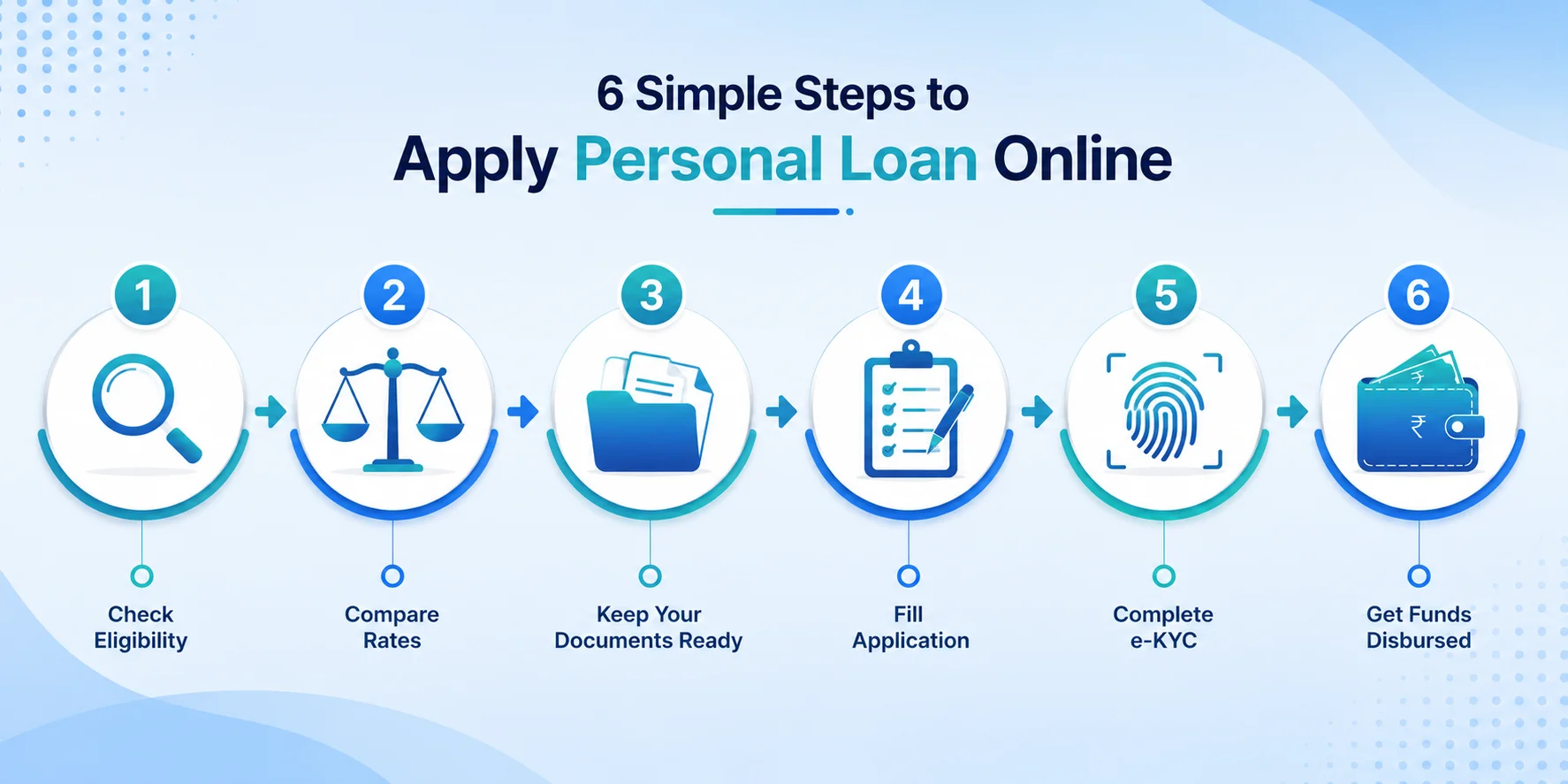
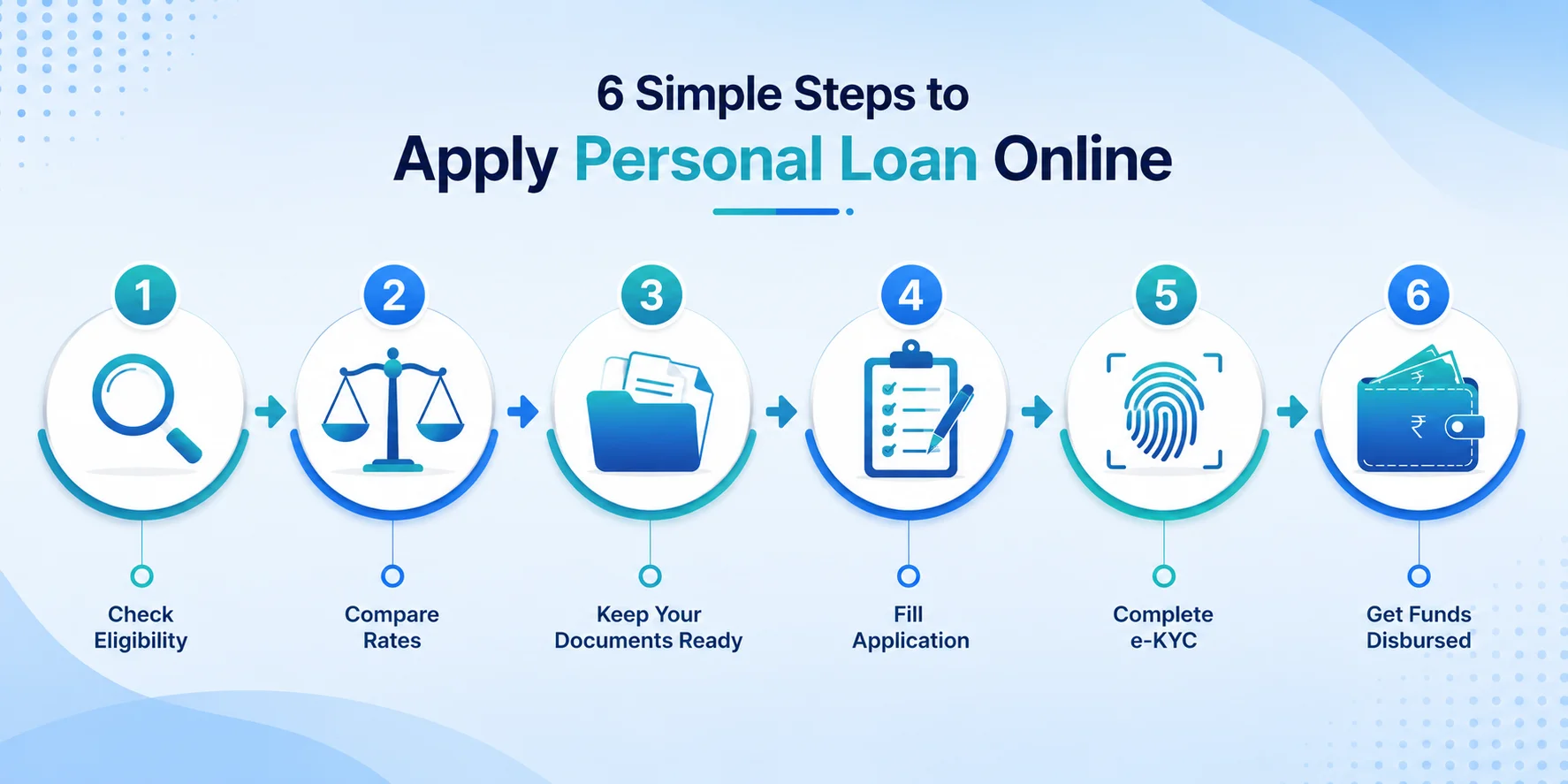
Step-by-Step Process to Apply Personal Loan Online
There's no need to overthink this. The flow is fairly consistent across most lenders once you break it down:
- See where you stand first. Before filling anything out, lenders will size you up on age, income, job type, and how your credit history looks. You can use our free Loan Eligibility Calculator to check your borrowing power in 60 seconds.
- Don't settle on the first rate you see. Offers can swing anywhere between roughly 10% and 24%, so a quick comparison across two or three lenders is worth the extra ten minutes. Compare Personal Loan Offers from 40+ RBI-regulated lenders.
- Have your paperwork sitting ready. Scanning documents in advance, rather than hunting for them mid-application, is what actually saves time.
- Fill in the form itself. If your details line up correctly, this step rarely takes more than ten minutes.
- Verify your identity digitally. Aadhaar-linked e-KYC handles this without requiring a branch visit at all.
- Wait for the green light. Verified applicants often see funds land within hours rather than days.
Sticking to this order is usually what separates a same-day approval from an application that drags on unnecessarily.
Eligibility Criteria to Apply Personal Loan Online
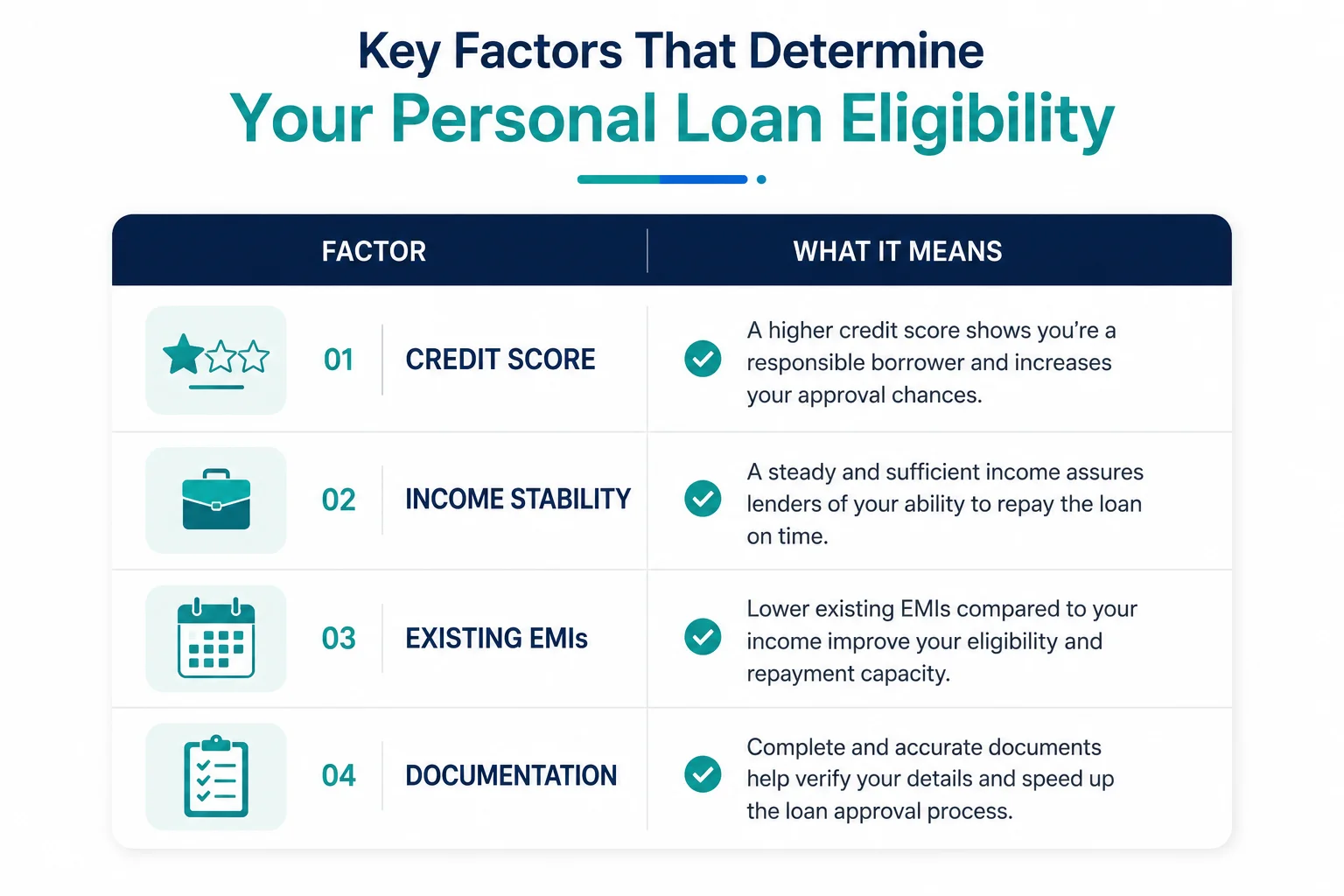
It helps to know what's being evaluated on the other side before you submit anything. Requirements shift slightly from one lender to another, but the underlying checklist tends to look similar:
| What Gets Checked | What Lenders Usually Expect |
|---|---|
| Applicant's age | Between 21 and 60 |
| Monthly income | Roughly ₹15,000 – ₹25,000 minimum, lender-dependent |
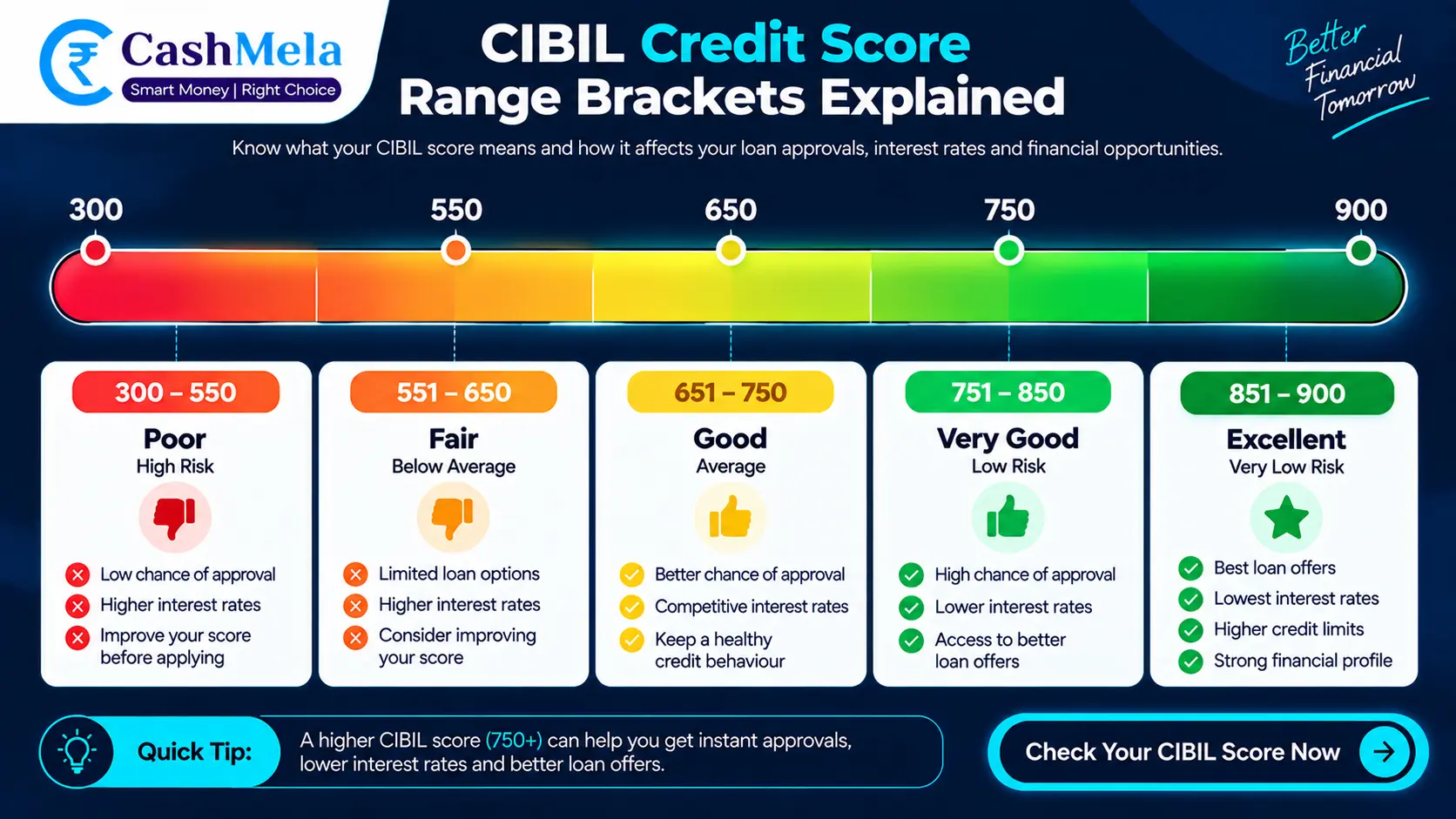
| Credit history (CIBIL) | 650+ generally preferred |
| Nature of employment | Salaried or self-employed, with income consistency |
| Current debt load | Fewer existing EMIs works in your favor |
Ticking these boxes isn't a guarantee of approval on its own, but falling noticeably short of them is where most rejections and delays actually originate. If you have multiple high-interest EMIs affecting your debt load, consider a Debt Consolidation Loan to lower your monthly outflow before applying.
Documents Needed to Apply Personal Loan Online
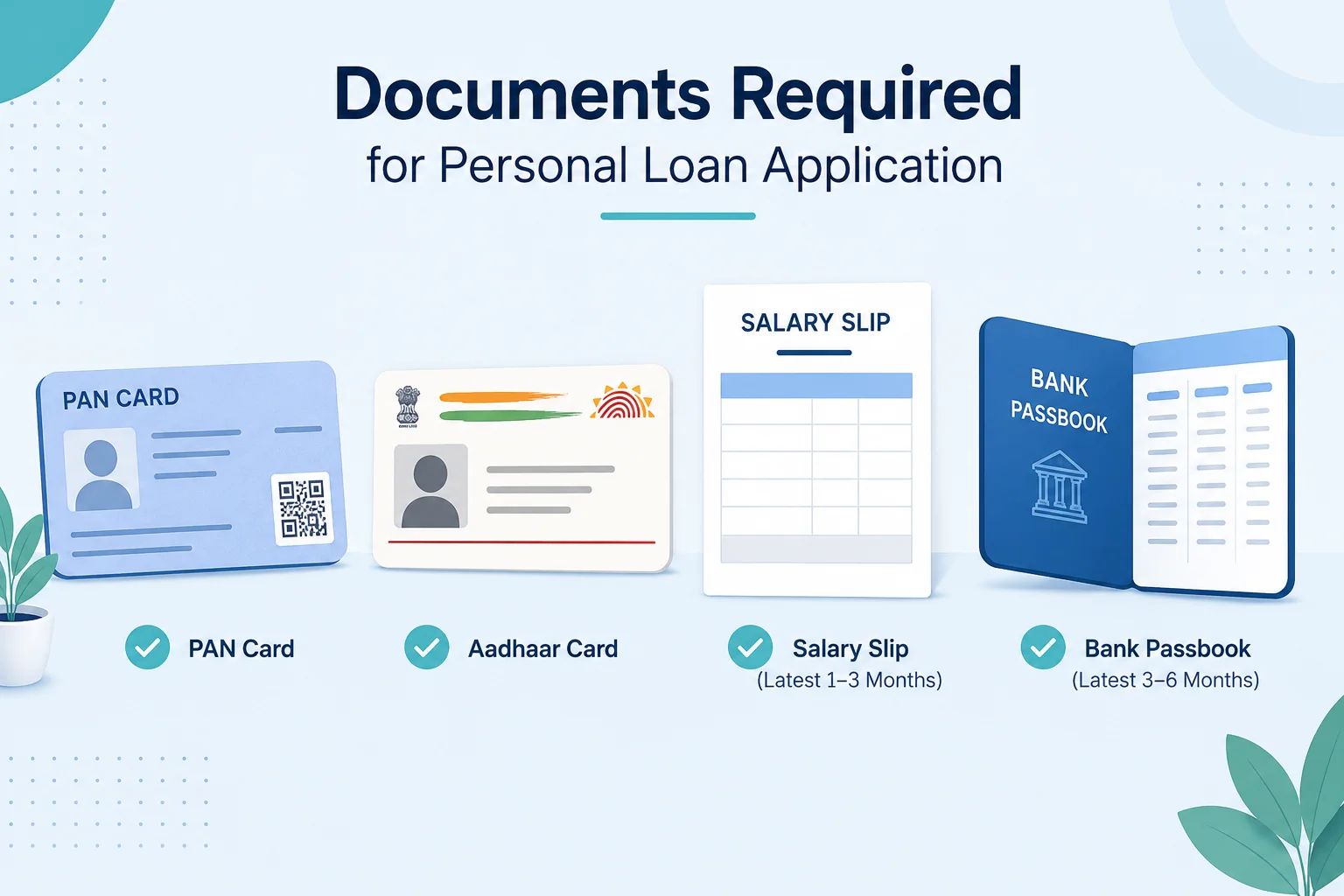
Going digital doesn't mean skipping verification. It just moves the process from a physical counter to an upload screen. What you'll generally be asked for:
- Proof of who you are: PAN and Aadhaar
- Proof of what you earn: Three months of salary slips, or an ITR if you're self-employed
- A look at your finances: Bank statements from the last few months
- Confirmation of where you live: Aadhaar, a recent utility bill, or a passport
Having clean, current copies of these on hand before you start the form is one of the easiest ways to sidestep avoidable delays later.
Why Digital Applications Beat Branch Visits
Going online isn't just a convenience upgrade. It changes the actual mechanics of how fast things move. A branch visit typically means physical forms, someone manually checking each document, and sitting in a processing queue that can stretch across several days. Move the same steps online, and automated checks plus instant e-KYC compress that timeline down to hours, occasionally minutes, if you're already pre-approved.
There's a transparency edge here too. Most digital platforms lay out interest rates, fees, and rough EMI numbers before you've committed to anything, which is genuinely harder to pin down by comparing multiple branches in person. You can use our Personal Loan EMI Calculator to preview your exact monthly EMIs.
Avoidable Application Habits
A handful of avoidable habits cause most of the friction people run into. Sending applications to several lenders at once triggers a fresh hard inquiry each time, and stacking too many of these in a short window can quietly drag your score down.
Small inconsistencies, like an address on your form that doesn't match your documents, are a surprisingly common reason for delays. It's also worth actually reading through processing fees and prepayment terms before signing off, since these differ more between lenders than people expect, and can add up over the loan's life. Check out our guide on How to Compare Lenders to spot hidden charges before committing.
How Interest Rates Are Actually Decided
The rate you're offered isn't based on your credit score alone. Lenders weigh it alongside income stability, how much debt you're already carrying, your employment type, and your track record of repaying on time. Generally, a score above 750 puts you in line for the sharper offers, while a score sitting between 650 and 700 can still get you approved, just at a somewhat higher cost.
One thing worth flagging: the rate shown early in an application is frequently just a working estimate. The number that actually sticks usually gets locked in only after your documents have been checked. If there's a noticeable gap between that early estimate and the confirmed figure, it's worth pausing to ask why before accepting anything.
Even modest effort to strengthen your credit score in the weeks leading up to your application, whether that's clearing a small pending due or bringing down how much of your card limit you're using, can shift the rate you're eventually offered. It's a small bit of groundwork that often pays for itself many times over across the loan's tenure.
What Happens After Disbursal
Once the money lands, the real work is managing repayment consistently. Setting your EMI to auto-debit is one of the simplest safeguards against a missed payment, which tends to hurt your credit score more than the original application ever did.
If your circumstances shift for the better—say a raise, a bonus, or unexpected savings—many lenders will let you make a partial prepayment with little to no penalty on floating-rate loans, which either shortens your tenure or eases your EMI going forward.
It's also worth holding onto your loan agreement, EMI schedule, and eventually your NOC (No Objection Certificate) once the loan closes out. People tend to forget this until they need it, usually right when they're applying for the next loan.
Frequently Asked Questions (FAQs)
Q1: How long does the online application take to get approved?
A: A lot of lenders return a decision within a few hours, and funds can arrive the same day if your e-KYC and documents check out cleanly.
Q2: Can I complete the entire process without visiting a branch?
A: Yes. From the initial form through document upload, KYC, and disbursal, none of it requires stepping into a physical location.
Q3: Does applying online affect my credit score?
A: One application typically causes a small, short-lived dip from the inquiry itself. Sending several applications close together can pull it down further.
Conclusion
The shift to digital lending has genuinely rewritten how quickly people can get access to money when it actually matters. Working out how to apply personal loan online usually comes down to skipping the branch queue, being able to compare rates honestly upfront, and getting an answer in hours instead of days.

Samarth Shigvan
Marketing Head & Growth LeadAuthor & Financial Analyst at CashMela.com
Samarth Shigvan is the Marketing Head at Cashmela.com. He oversees brand strategy, performance marketing, SEO, and borrower educational initiatives across India. Samarth is passionate about simplifying complex financial topics—such as CIBIL score optimization, interest rates comparison, and debt freedom strategies—into actionable, transparent guides for everyday consumers.