Introduction
Ever checked your score twice in the same month and noticed it barely moved, only to see a bigger jump a few weeks later for seemingly no reason? That's not a glitch, it's simply how cibil credit score updates actually work behind the scenes.
Understanding the timing behind these changes can save you from a lot of unnecessary confusion, especially right before a big loan application. This guide breaks down exactly how often your score refreshes, what triggers a change, and how recent rule changes have sped up the whole process.
How CIBIL Credit Score Updates Actually Work
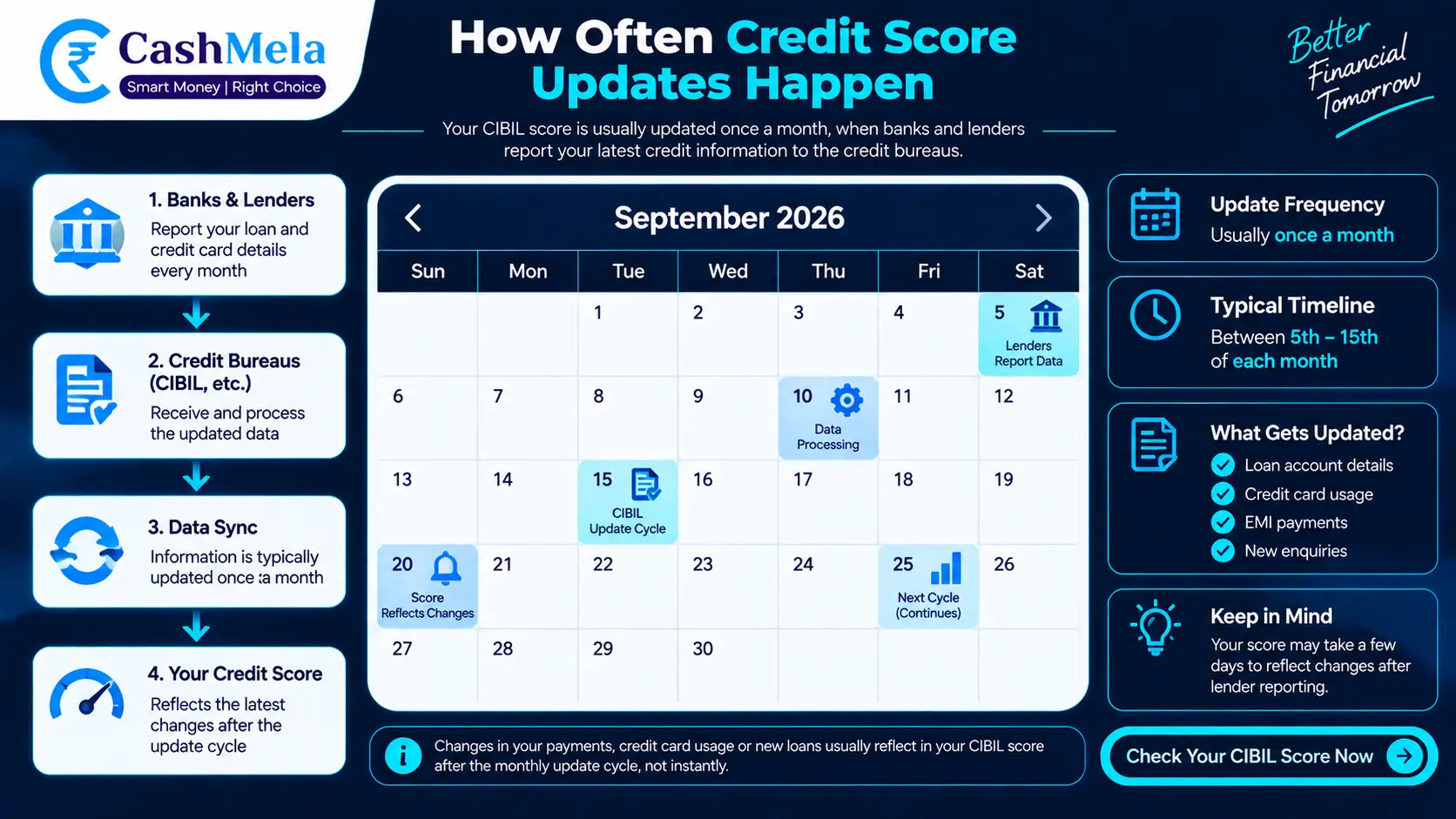
Here's the part most people get wrong: your score isn't calculated fresh every time you check it. It only changes when new information actually reaches the bureau from your lenders.
The Basic Update Cycle
- Scheduled lender reporting: Lenders report your account activity—EMI payments, credit card bills, new credit inquiries—to CIBIL on their respective reporting calendars.
- Bureau data ingestion: CIBIL processes incoming bank files and recalculates your score based on the freshest verified information.
- Snapshot display: The number you see when you check your score reflects whatever was last reported and processed, not your momentary real-time bank balance.
- Varied lender timelines: Different lenders report on slightly different dates across the month, so updates don't all land on a single uniform day.
Take Neha's story as an example. She cleared a large credit card balance on the 3rd of the month, expecting her score to jump immediately. When she checked a week later, nothing had changed. Confused, she almost assumed the payment hadn't gone through. It had—her card issuer simply hadn't reported the updated balance to CIBIL yet. Her score reflected the improvement about three weeks later, once the next reporting cycle went through.
Why CIBIL Credit Score Updates Are Faster Than They Used To Be
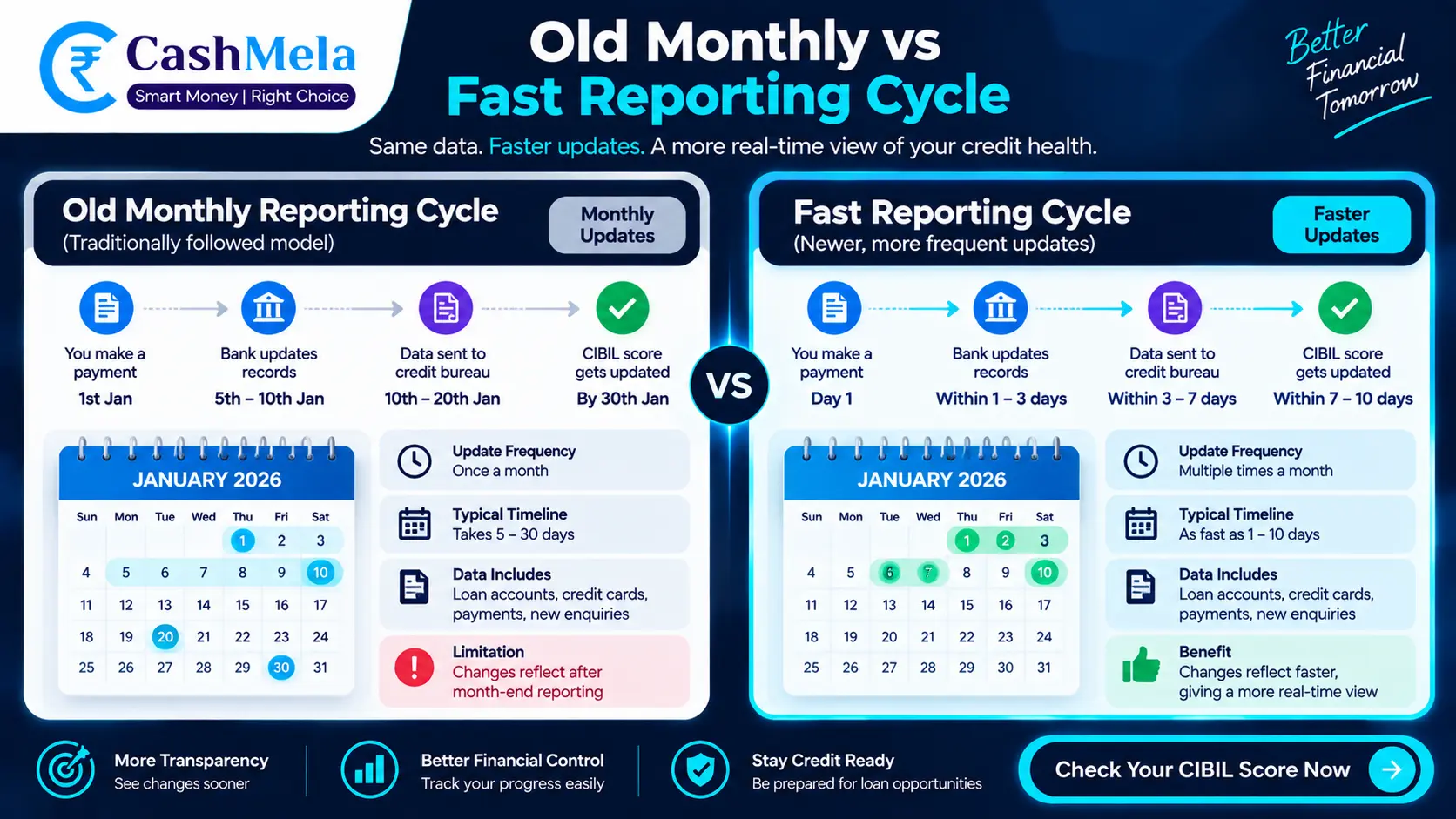
This is genuinely useful to know if you haven't checked your score in a while. Starting July 2026, RBI rules require lenders to report credit data to bureaus considerably more frequently than the old monthly standard, shortening the gap significantly.
What Changed and Why It Matters
| Aspect | Before July 2026 | After July 2026 |
|---|---|---|
| Reporting frequency | Monthly cycle (every 30 to 45 days) | Considerably more frequent (every 7 to 14 days) |
| Time to see a payment reflected | Up to 4 – 6 weeks | Often within 3 – 7 days |
| Time to see a missed payment reflected | Up to 4 – 6 weeks | Significantly faster (cuts both ways) |
| Credit bureau recalculation | Once a month batch update | Rolling updates multiple times per month |
That last row matters just as much as the good news. Faster cibil credit score updates mean your good habits get rewarded sooner, but a missed payment also shows up faster than before—there's less room to quietly fix a mistake before it gets reported.
What Actually Triggers a Change in Your Score
Is every single transaction reported? Not exactly, only specific account-level events actually move the needle on your cibil credit score updates cycle.
Common Triggers Worth Knowing
- Repayment posting: A new EMI or credit card payment posted, whether on time or delayed past the grace period.
- Credit utilization shift: A change in your total credit utilization ratio once your card statement generates.
- New credit line activation: Opening a new personal loan, consumer durable EMI, or credit card account.
- Hard inquiry logs: A hard inquiry triggered whenever you apply for fresh credit with a financial institution.
- Account status transitions: Account closure, debt settlement, or an account moving into default or written-off status.
How to Track Your CIBIL Credit Score Updates Over Time
Rather than checking obsessively and getting confused by small fluctuations, it helps to track the trend instead of the daily number.
A Simple Way to Stay on Top of It
- Check monthly, not daily: Check your score roughly once a month, not weekly, to avoid reading too much into normal reporting lag between lenders.
- Maintain a financial log: Keep a simple note of your score alongside major financial actions, like clearing a card balance, so you can match changes to causes later.
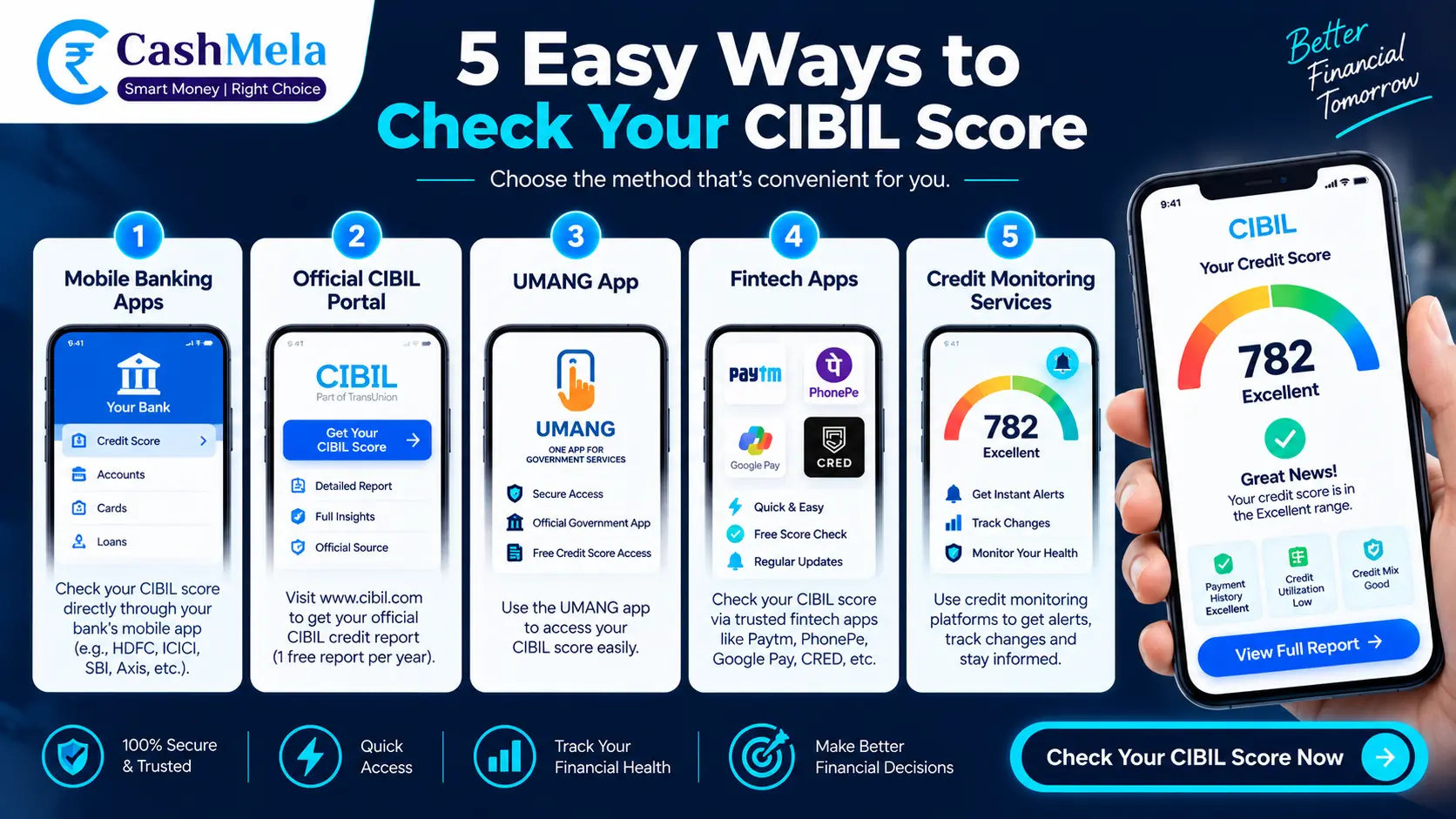
- Combine annual deep dives with routine checks: Use your free annual report from CIBIL for the full picture, and a trusted app for quick monthly check-ins in between.

What CIBIL Credit Score Updates Mean Before a Big Loan Application
Timing matters more than people realize here. If you're planning a significant loan application in the next month or two, understanding cibil credit score updates ahead of time can genuinely change your outcome.
Clearing high credit card balances at least three to four weeks before applying gives the improvement enough time to reflect, rather than applying the same week you pay something off and wondering why your score still looks unchanged.
The same logic works in reverse: avoid opening a new credit card or applying for another loan right before a major application, since the resulting hard inquiry and fresh account can temporarily pull your score down exactly when you need it at its strongest.
Frequently Asked Questions
Q1: How long after paying off debt will my score actually change?
A: Typically within a few days to a few weeks now, depending on how quickly your specific lender reports the update to the bureau under the newer, faster reporting cycle.
Q2: Why did my score change even though I didn't do anything new?
A: Your utilization ratio can shift simply because your statement generated with a different balance, or another account's reporting cycle landed that month, even without any new activity from you.
Q3: Do all lenders report cibil credit score updates on the same schedule?
A: No, reporting timing varies by lender, which is exactly why two accounts you're managing identically can reflect changes at noticeably different times.
Q4: Can I request an immediate score update after clearing a due?
A: Not directly, since the update depends on your lender reporting to the bureau. You can ask your lender to confirm they've updated their records, which speeds up the reporting on their end.
Q5: Will checking my own score too often distort or delay updates?
A: No, checking your own score is a soft inquiry with zero effect on the number or its update timing. You can check as often as you'd like without any downside.
Conclusion
Understanding how cibil credit score updates actually happen takes a lot of the guesswork and anxiety out of monitoring your credit. Give changes a few weeks to reflect rather than expecting instant results, track the trend rather than obsessing over daily fluctuations, and remember that faster reporting now cuts both ways, good and bad. A little patience paired with the right expectations makes this whole process far less stressful.
Ready to see what you qualify for? Check your eligibility and apply now for a loan or card that matches your credit profile.
Stay Informed, Stay Ahead!
Follow Cashmela on social media for more practical finance guides, loan tips, and the latest updates:
- 💰 Instagram: @cashmela_com – Simple finance tips and real borrower stories
- 👍 Facebook: Cashmela – Join the conversation and never miss an update
- 🐦 X: @cash_mela – Quick updates and finance news
- 💼 LinkedIn: Cashmela – Industry insights and company updates
✨ Let's make smarter borrowing simple, together!

Vitthal Korvan
Tech Head & Lead Systems ArchitectAuthor & Financial Analyst at CashMela.com
Vitthal Korvan is the Tech Head at Cashmela.com. An expert systems architect and financial algorithm specialist, Vitthal spearheads Cashmela's proprietary EMI Matching Engine, instant eligibility calculators, and end-to-end encrypted API integrations with partner lending institutions. He ensures 99.99% system uptime and bank-grade data security for millions of monthly platform visitors.