Introduction
Ask any business owner what keeps them up at night, and somewhere on that list you'll find a version of the same question: what business loan interest rate am I actually going to get, and is it fair? Honestly, that worry isn't misplaced. A difference of even one or two percentage points on a loan of a few lakhs can quietly cost you tens of thousands of rupees over the tenure, money that could have gone into inventory, salaries, or that new equipment you've been eyeing.
The tricky part is that this rate isn't a fixed number floating out there in the market. Several things shape it at once: how strong your credit profile looks, how long your business has been running, and which lender's door you happen to knock on. This guide breaks all of that down in plain language, so you walk into your next application knowing exactly what to expect.
What Shapes Your Business Loan Interest Rate
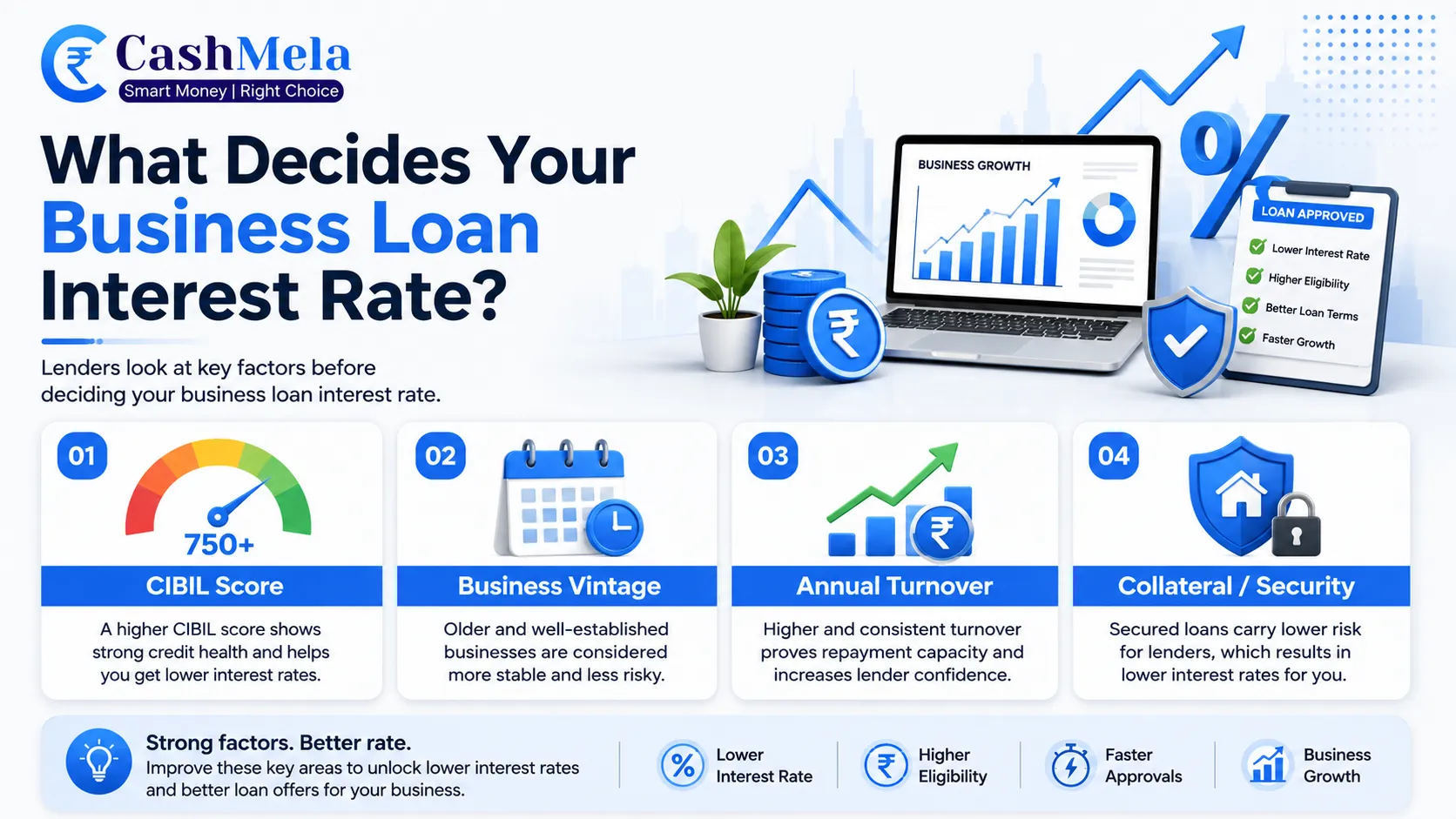
Here's the thing nobody tells you upfront: two businesses applying for the same loan amount, on the same day, can walk away with completely different rates. Lenders don't price a loan off a single factor. They look at a combination of signals, and each one nudges the number up or down.
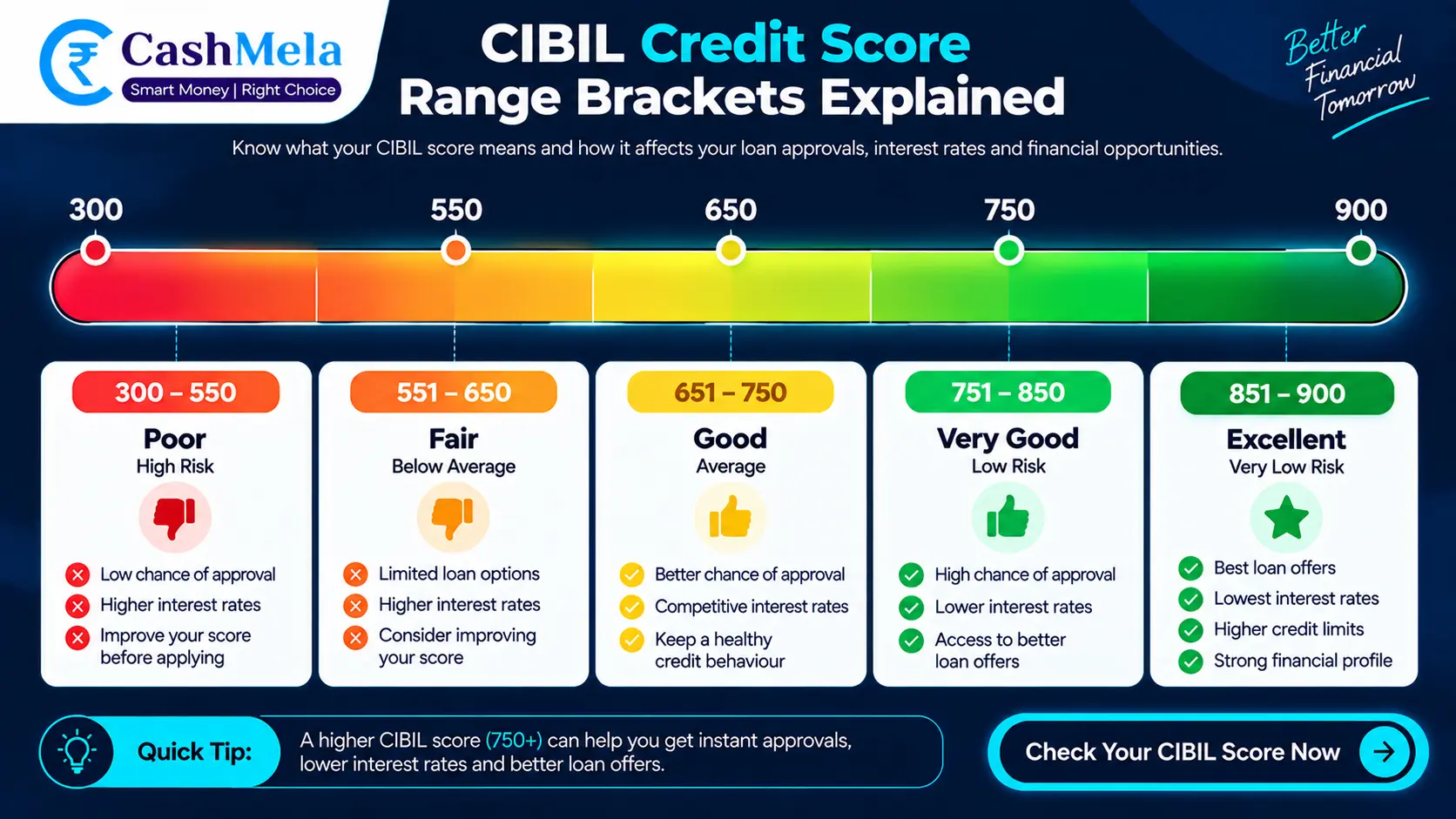
- Credit score. A CIBIL score above 750 tends to unlock the lower end of a lender's rate band, while anything below 650 often means either rejection or a noticeably higher rate to offset the perceived risk.
- Business vintage and stability. A business that's been operating profitably for five years reads very differently to an underwriter than one that started eight months ago. Longer, steadier history generally means better pricing.
- Annual turnover and cash flow. Lenders want to see that your revenue comfortably supports the EMI. Healthy, consistent bank inflows work in your favour here.
- Collateral. Secured loans, where you pledge property or another asset, almost always carry a lower business loan interest rate than unsecured ones, simply because the lender's risk is cushioned.
- Type of lender. Every category of lender, be it a public sector bank, a private bank, or an NBFC, weighs risk on its own scale, and that mismatch alone is enough to move your quote by two or three percentage points.
Isn't it a bit strange that the same loan can look so different depending on where you apply? That's exactly why comparing offers before signing anything matters more than people realise.
Current Business Loan Interest Rate Trends in India
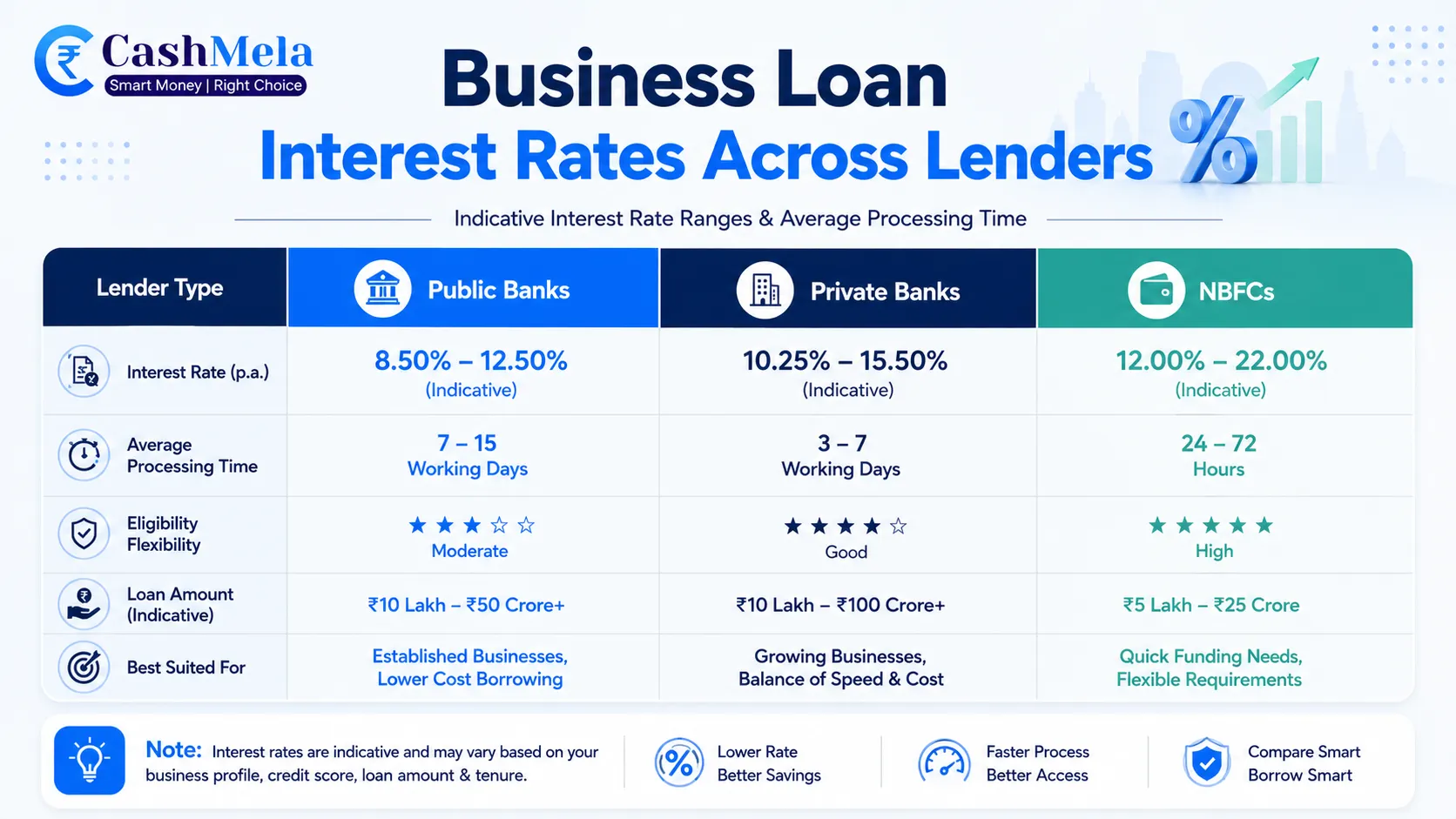
So what does the actual number look like right now? As a general range, unsecured loans in India typically carry a business loan interest rate anywhere between 10.5% and 24% per annum, depending on the applicant's profile. Secured loans tend to sit lower, often starting around 8.5% to 9.5%, because the collateral reduces the lender's exposure.
Public sector banks generally anchor toward the lower end of this range but come with slower processing and heavier documentation. NBFCs and digital lenders move faster and approve more flexibly, though that convenience usually comes with a slightly higher rate attached.
It's worth remembering that these figures shift with the broader repo rate environment too. When the central bank adjusts policy rates, lenders eventually pass that movement through to their rate cards, sometimes within weeks, sometimes over a couple of quarters.
A Quick Story: How Rate Shopping Actually Pays Off
Take Meenal, who owns a small packaging unit just outside Ahmedabad. When she needed ₹ 8 lakh to buy a second machine, her regular bank quoted her a business loan interest rate of 16.5%. It wasn't a bad offer, but it wasn't great either, and something told her not to sign on the spot.
She spent two days getting quotes from three other lenders. One NBFC came in at 14.9% for the same amount and tenure. That gap, spread across a four-year loan, saved her close to ₹ 28,000 in total interest. Her takeaway, and a fair one for most borrowers, is that the first quote you receive is rarely the best one available. It's simply the first number somebody offered you.
How to Get a Better Business Loan Interest Rate
You can't control the RBI's repo rate or a lender's internal risk model, but you do have more leverage than you might think. Here's what actually makes a real difference:
- Keep your CIBIL score above 750 well before you apply, not after you've already been quoted a high rate
- Maintain clean, consistent bank statements for at least the past twelve months
- File your ITRs on time and make sure declared income matches your actual bank inflows
- Offer collateral where possible, since it almost always brings the rate down
- Avoid applying to five lenders in the same week, as multiple hard inquiries in quick succession can hurt your score
- Negotiate. Many borrowers accept the first number without realising there's often room to push back, especially with a competing offer in hand
None of this guarantees the lowest possible rate, but together it stacks the odds firmly in your favour.
Fixed vs Floating: Which Affects Your Rate More?
A fixed rate stays the same for the entire tenure, which makes budgeting predictable but can work against you if market rates fall later. A floating rate, on the other hand, is tied to the lender's benchmark and adjusts as that benchmark does, which means your EMI can go up or down during the loan term.
For shorter tenures, the difference is usually marginal. For longer loans, it's worth thinking through which trade-off you're more comfortable living with.
Business Loan Interest Rate vs Other Costs You Shouldn't Ignore
Here's a mistake a lot of first-time borrowers make: fixating entirely on the headline rate while glossing over everything else attached to the loan. Processing fees, prepayment penalties, and documentation charges can add real cost on top of the rate itself.
A loan advertised at a slightly higher business loan interest rate but with zero prepayment penalty can, in some cases, work out cheaper than a lower-rate loan that locks you in tightly. Always ask for the effective annual cost, not just the sticker rate, before comparing two offers side by side.

Frequently Asked Questions
Q1: What is a good business loan interest rate in India right now?
Anything in the 9% to 14% range is generally considered competitive for a well-qualified borrower, though secured loans can go lower and unsecured loans for newer businesses often sit higher.
Q2: Does a higher loan amount mean a lower interest rate?
Not automatically. Loan amount matters less than your credit profile, business vintage, and whether the loan is secured or unsecured.
Q3: Can I negotiate my rate after approval?
It's harder once terms are finalised, but not impossible, especially if you have a competing offer or your credit profile has improved since the original quote.
Q4: How often do lenders revise their business loan interest rate cards?
Most lenders review their rate cards quarterly, though they can adjust sooner if the central bank changes policy rates.
Q5: Is a lower rate always the better deal?
Usually, but not always. Factor in processing fees, prepayment charges, and tenure flexibility before deciding, since these can offset a small rate advantage.
Conclusion
At the end of the day, understanding your business loan interest rate isn't just about chasing the smallest number on a lender's website. It's about knowing what pushes that number up or down, being honest with your documentation, and taking the time to compare more than one offer before you commit. A slightly lower rate, secured through preparation rather than luck, can free up real cash for the parts of your business that actually need it.
Ready to see what rate you'd actually qualify for? Check your eligibility and apply now to compare business loan interest rate offers from multiple lenders in minutes, with no impact on your credit score.
Internal links to explore:
- Compare Business Loans from 40+ Lenders
- Free EMI Calculator
- CIBIL Score Guide for Business Owners
- Working Capital Loan Options
Follow CashMela on Social Media
Follow Cashmela on social media for more practical finance guides, loan tips, and the latest updates:
- Instagram: @cashmela_com – Simple finance tips and real borrower stories
- Facebook: Cashmela – Join the conversation and never miss an update
- X (Twitter): @cash_mela – Quick updates and finance news
- LinkedIn: Cashmela – Industry insights and company updates
Let's make smarter borrowing simple, together!
Disclaimer: Interest rates, eligibility criteria, and loan terms mentioned in this article are indicative and subject to change. Please verify the latest information with your chosen lender before making any financial decision. This article is for informational purposes only and does not constitute financial advice.

Adil Patel
Founder & Chief Executive OfficerAuthor & Financial Analyst at CashMela.com
Adil Patel is the Founder of Cashmela.com. With over a decade of deep domain expertise across Indian banking, debt restructuring, and digital lending, Adil established Cashmela to liberate Indian borrowers from predatory credit card interest traps and opaque multi-EMI debt burdens. Under his leadership, Cashmela has helped over 50,000 borrowers consolidate EMIs into single, transparent, and affordable repayment plans.