Introduction
Ever wondered why one friend gets a personal loan approved in an hour while another gets rejected outright, despite earning roughly the same salary? Nine times out of ten, the answer comes down to one number: their cibil credit score. It's a three-digit figure that quietly decides how lenders see you, long before you ever walk into a branch or fill out an online form.
This guide breaks down what actually shapes your cibil credit score, what counts as a genuinely good number in 2026, and practical steps to push yours higher.
What Is a CIBIL Credit Score, in Plain Terms
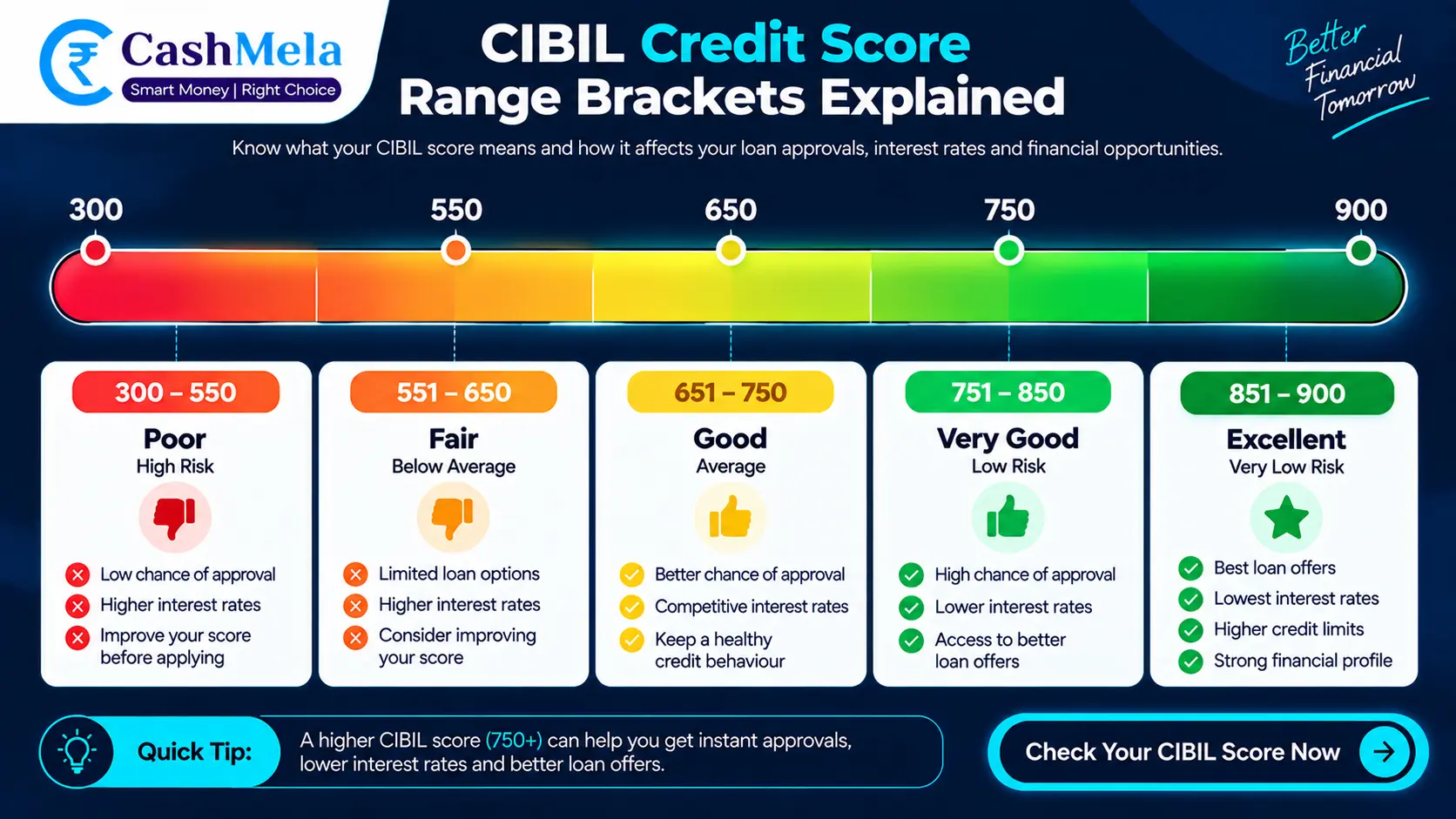
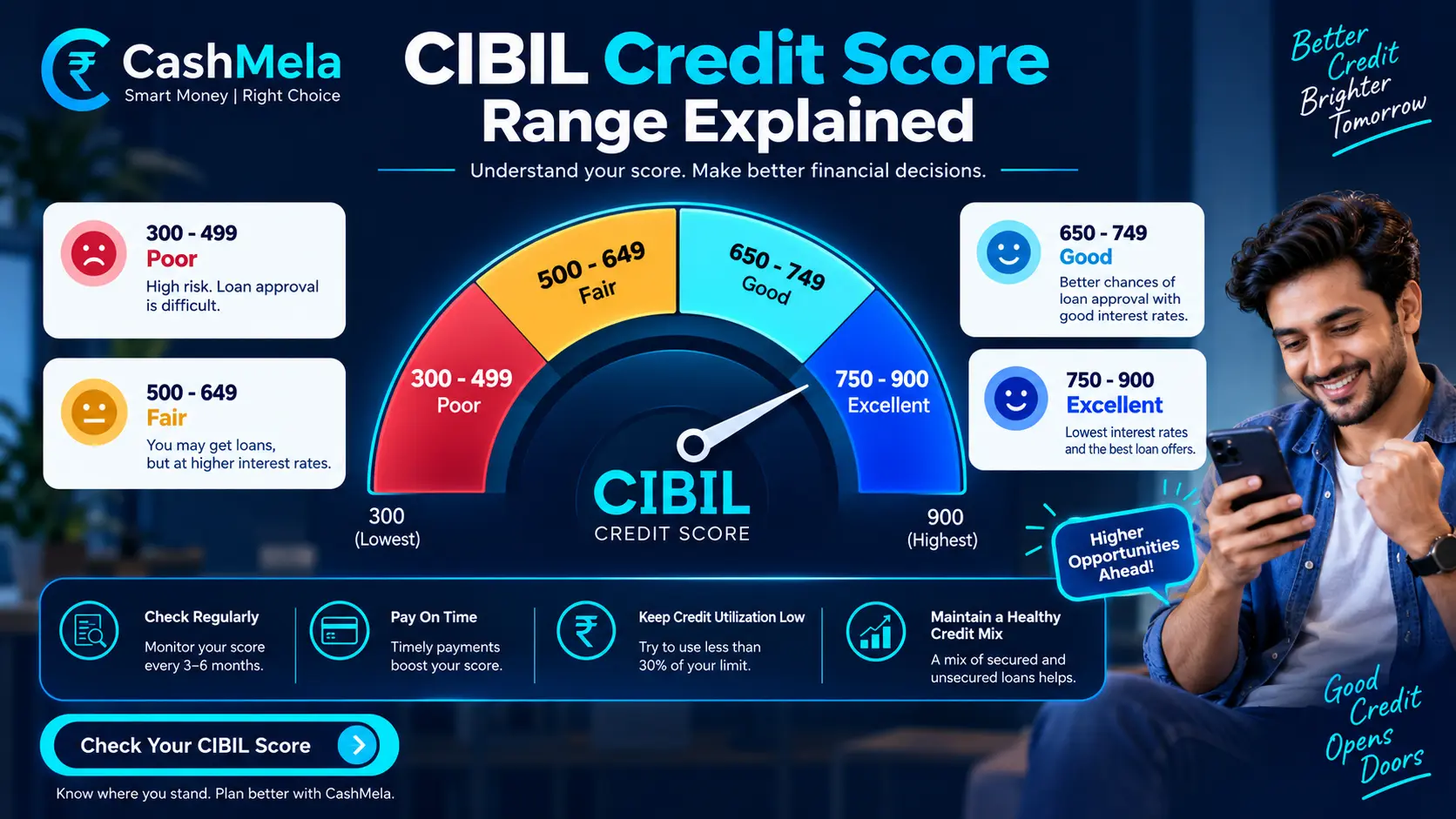
Let's clear up the basics first. A cibil credit score is a three-digit number, ranging from 300 to 900, calculated by TransUnion CIBIL based on your entire borrowing history. Every EMI you've paid, every credit card bill, every loan enquiry, all of it gets compressed into this single figure that tells a lender how much risk you represent.
The Score Ranges at a Glance
| Score Range | What It Means |
|---|---|
| 750 – 900 | Excellent: Fastest approvals and best interest rates |
| 700 – 749 | Good: Approval likely, though not always the sharpest rate |
| 650 – 699 | Fair: Approval becomes conditional with tighter scrutiny |
| 300 – 649 | Poor: Most unsecured loans and credit cards get rejected |
What Actually Shapes Your CIBIL Credit Score
Is it just about paying bills on time? Mostly, but not entirely, there's more going on under the hood than most people realize.
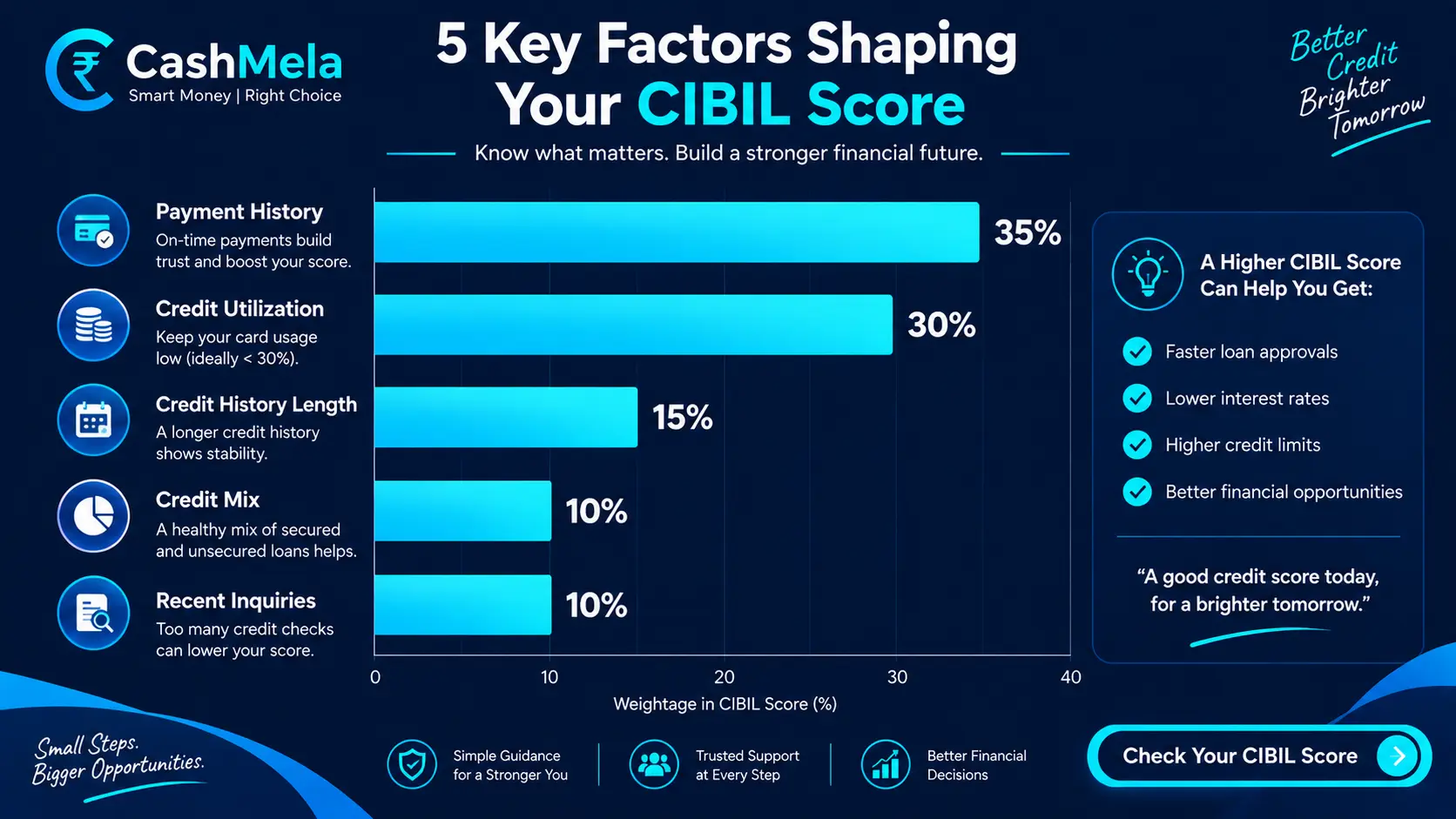
The Five Factors That Matter Most
- Payment history (roughly 35% weight): The single biggest factor by far. Consistent, on-time repayments signal reliable borrower discipline.
- Credit utilization (around 30% weight): How much of your available credit limit you're actually using. Keeping it under 30% is ideal.
- Length of credit history (about 15% weight): Older accounts with clean repayment records showcase long-term financial stability.
- Credit mix (roughly 10% weight): A healthy blend of secured loans (like home or auto loans) and unsecured credit (personal loans or credit cards).
- Recent inquiries (about 10% weight): Too many hard loan applications in a short window indicate credit hunger and quietly drag your score down.
Take Deepak's story as an example. A software engineer in Pune, he assumed his cibil credit score was suffering because of a large personal loan he was still repaying. Turns out the real culprit was his credit card utilization, he was regularly using 80-90% of his limit each month. Bringing that down to under 30% pushed his score up by nearly 60 points within a few months, without closing a single account or paying off the loan any faster.
Why Your CIBIL Credit Score Updates Faster Than It Used To
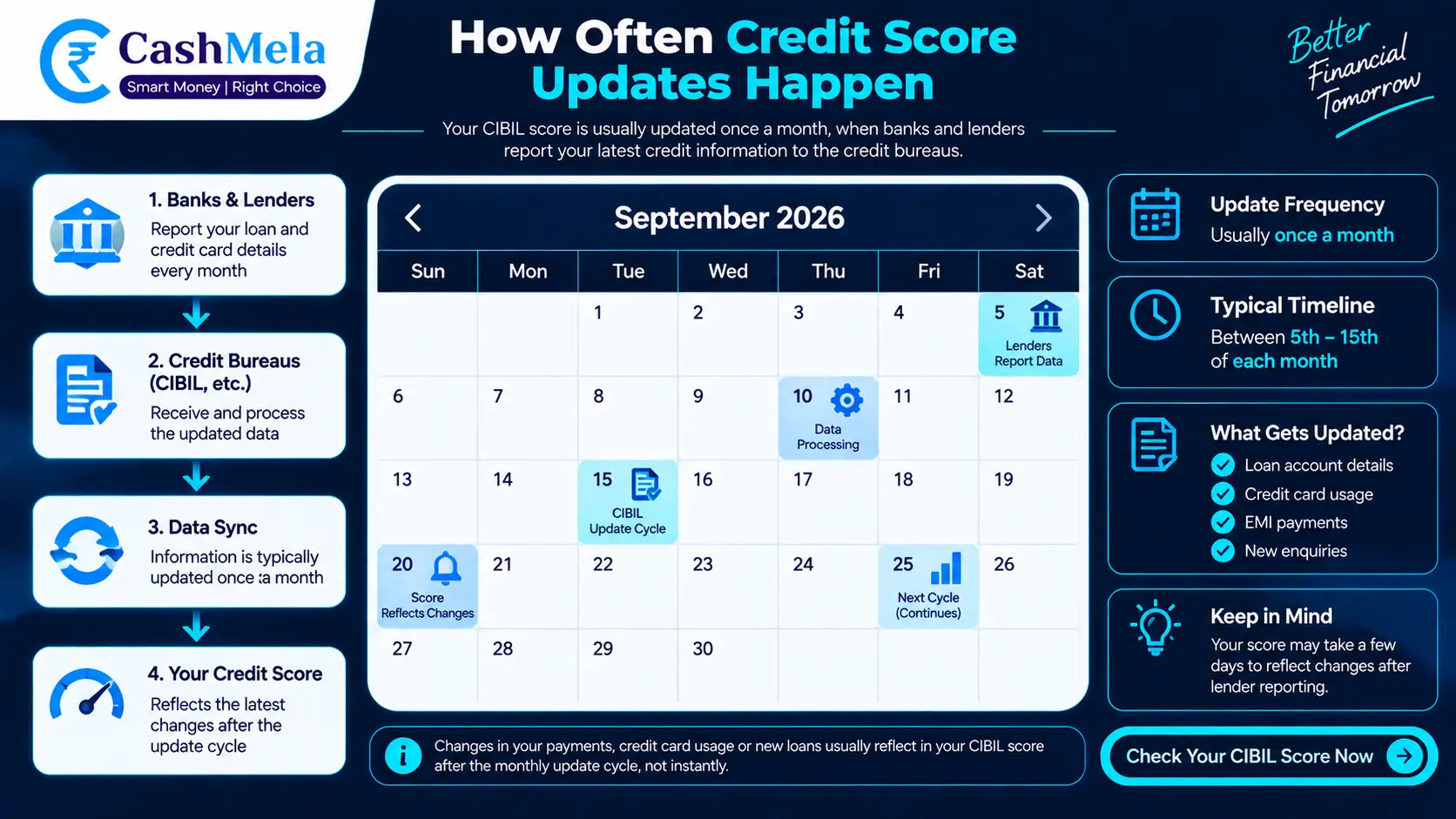
Here's something worth knowing if you haven't checked your score in a while. From July 2026, RBI rules require lenders to report credit data to bureaus far more frequently than before, moving from monthly updates to a much shorter cycle.
What does that mean practically? Good repayment behavior now shows up in your cibil credit score within days rather than weeks, and unfortunately, so does a missed payment.
How to Check Your CIBIL Credit Score Without Paying a Rupee
Is checking your own score risky? Not at all, a rhetorical question worth settling once and for all, since it's a common myth that trips people up.
Your Free Options
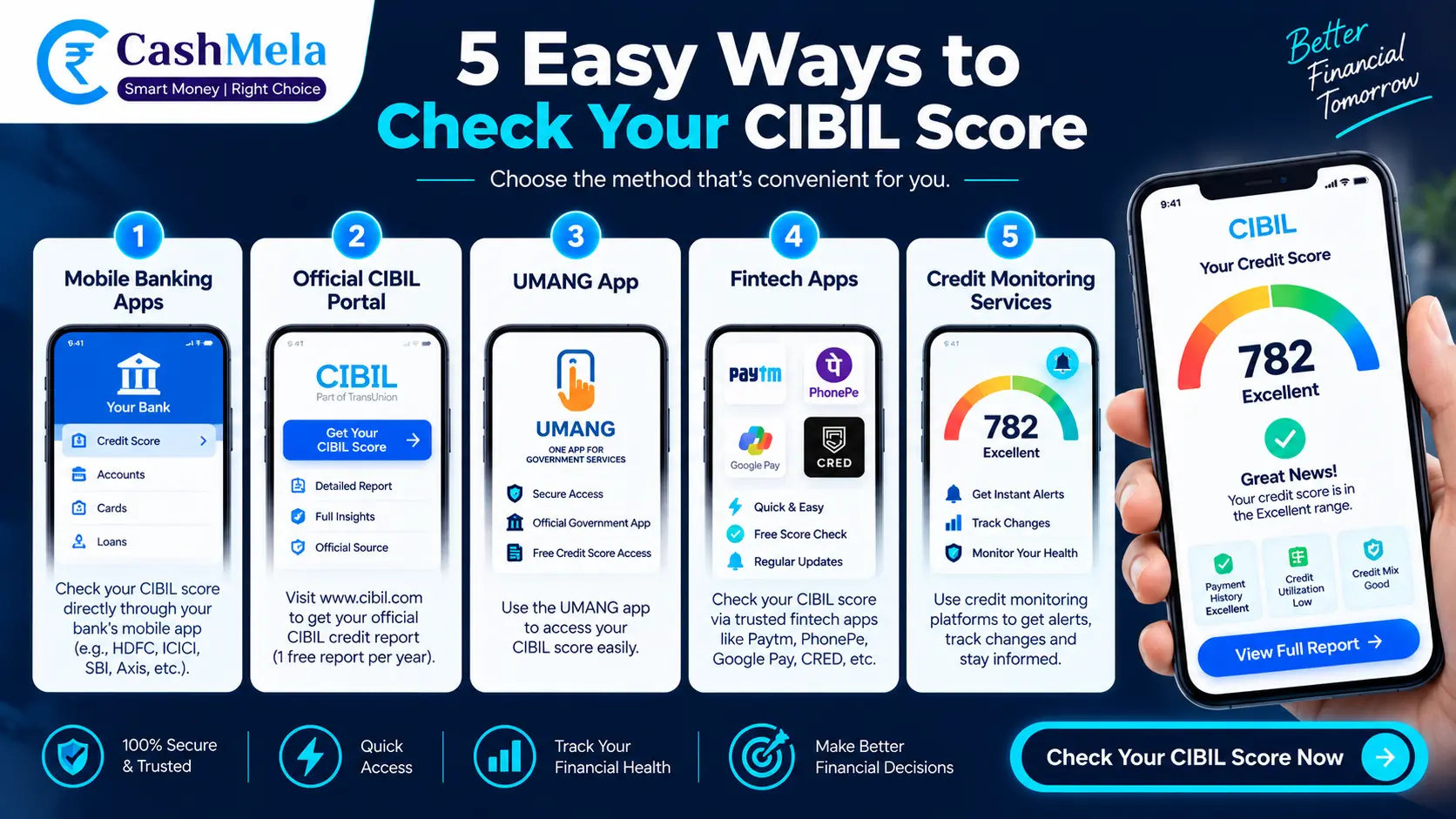
- One full free credit report per calendar year: Available directly from CIBIL through cibil.com, using your PAN.
- Entitlement across all four credit bureaus: The same free-report entitlement applies to all four Indian credit bureaus: CIBIL, Experian, Equifax, and CRIF High Mark.
- Soft inquiry with zero penalty: Checking your own score is a "soft inquiry" and has zero impact on the number itself, regardless of how often you check it.
It's genuinely worth building this into a habit rather than a one-time check. Reviewing your report every few months lets you catch errors, an incorrectly reported late payment, for instance, before they quietly drag your eligibility down without you even realizing why lenders keep hesitating.

Frequently Asked Questions
Q1: What is considered a good CIBIL credit score in 2026?
A: A score of 750 or above is generally considered excellent, unlocking the fastest approvals and lowest interest rates. Scores between 700 and 749 are still workable but may miss the sharpest rates.
Q2: Does checking my own credit score lower it?
A: No, checking your own score counts as a soft inquiry and has no impact whatsoever. Only lender-initiated hard inquiries, triggered when you actually apply for credit, can cause a small, temporary dip.
Q3: How long does it take to improve a poor CIBIL credit score?
A: With consistent on-time payments and lower credit utilization, meaningful improvement can show within three to six months, especially now that reporting updates happen much faster than before.
Q4: Can I have a CIBIL credit score with no loan or credit card history at all?
A: No, a score only exists once you've had an active loan or credit card reported within the last 36 months. Without credit history, your report typically shows "NA" or "NH" instead of a number.
Q5: Does closing an old credit card help or hurt my score?
A: It often hurts more than it helps, since it can shorten your average credit history length and raise your overall utilization ratio. Keeping old accounts open and lightly used is usually the better move.
Conclusion
Understanding your cibil credit score isn't just a finance-nerd exercise, it's genuinely one of the most useful things you can do before applying for any loan or credit card. Check your score for free, focus on the two factors that matter most, payment history and utilization, and give it a few months to reflect the changes. A little attention here saves real money on every rupee you borrow going forward, and puts you back in control of the terms rather than simply accepting whatever a lender first offers.
Ready to see what you qualify for? Check your eligibility and apply now for a loan or card that matches your credit profile.
Stay Informed, Stay Ahead!
Follow Cashmela on social media for more practical finance guides, loan tips, and the latest updates:
- 💰 Instagram: @cashmela_com – Simple finance tips and real borrower stories
- 👍 Facebook: Cashmela – Join the conversation and never miss an update
- 🐦 X: @cash_mela – Quick updates and finance news
- 💼 LinkedIn: Cashmela – Industry insights and company updates
✨ Let's make smarter borrowing simple, together!

Samarth Shigvan
Marketing Head & Growth LeadAuthor & Financial Analyst at CashMela.com
Samarth Shigvan is the Marketing Head at Cashmela.com. He oversees brand strategy, performance marketing, SEO, and borrower educational initiatives across India. Samarth is passionate about simplifying complex financial topics—such as CIBIL score optimization, interest rates comparison, and debt freedom strategies—into actionable, transparent guides for everyday consumers.