Introduction
Borrowing money without knowing your exact monthly outgo is a bit like signing a contract without reading it fully. That's exactly the gap a personal loan calculator is meant to close. Instead of guessing what a loan might cost you, you can plug in a few numbers and see, almost instantly, what your EMI will actually look like before you ever apply.
This guide walks through what the calculator is doing behind the scenes, how to read the numbers it gives you, and a few mistakes people commonly make when relying on it before applying for a real loan.

How a Personal Loan Calculator Actually Works
At its core, the tool takes three inputs, the amount you want to borrow, the interest rate you're being offered, and the tenure you plan to repay over, and runs them through a standard formula to spit out your monthly EMI. Nothing mysterious is happening under the hood; it's the same reducing-balance math your lender will use to generate your actual repayment schedule.
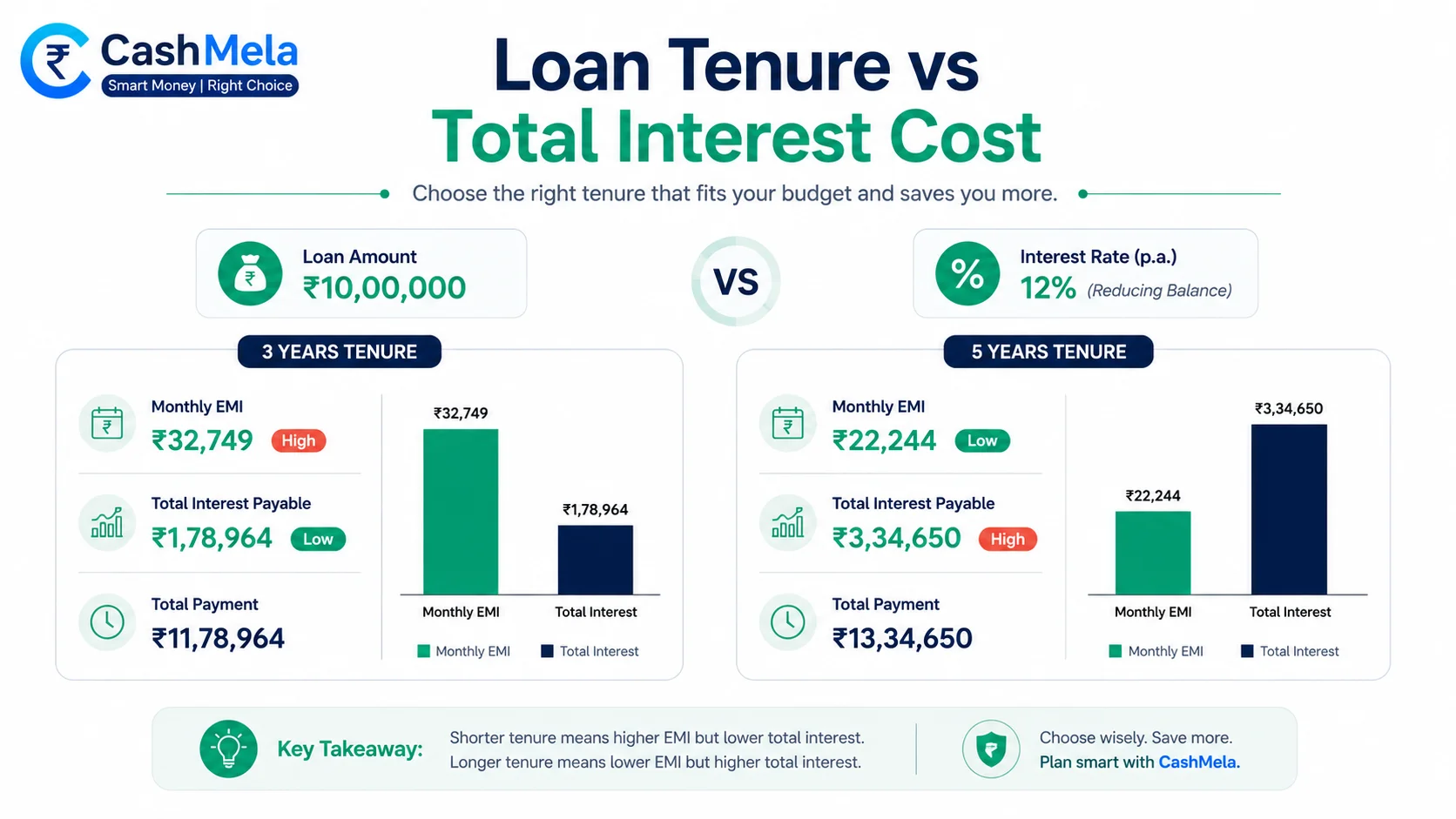
Change any one of the three inputs and the output shifts immediately. A longer tenure lowers your EMI but raises the total interest you'll pay. A shorter tenure does the opposite: a higher monthly payment but noticeably less interest overall. Seeing that trade-off play out in real time, rather than reading about it in the abstract, is really the whole point of the tool.
How to Read Your Personal Loan Calculator Results Correctly
Most calculators show you more than just a single EMI figure. Alongside it, you'll typically see the total interest payable and the total repayment amount across the full tenure. It's worth actually looking at all three, not just the EMI, since a lower monthly number can sometimes hide a much larger total interest cost stretched over a longer period.
| Output | What It Tells You |
|---|---|
| Monthly EMI | What you'll pay each month |
| Total Interest Payable | The full cost of borrowing over the tenure |
| Total Repayment Amount | Principal plus interest combined |
| Amortization Schedule | How much of each EMI goes to principal vs. interest |
The amortization schedule, if the tool offers one, is genuinely worth a look too. In the earlier months of a loan, a larger share of your EMI goes toward interest rather than principal, something that surprises a lot of first-time borrowers.
What Changes When You Adjust the Loan Amount
It's easy to focus only on rate and tenure, but the loan amount itself deserves just as much attention. Borrowing slightly less than what you're eligible for can sometimes make a meaningful difference to your EMI without significantly affecting what the funds can actually cover.
Before finalizing a figure, it's worth asking whether you genuinely need the full approved amount or whether a smaller, more comfortable number still meets your actual requirement. This is particularly relevant when a lender pre-approves you for more than you asked for, which happens more often than people expect. Accepting the higher figure simply because it's offered, rather than because you need it, is one of the quieter ways borrowers end up with a heavier monthly commitment than necessary.
What Mistakes People Make While Estimating Their Loan
The most frequent slip-up is using an interest rate that's more optimistic than what you'll actually be offered. Advertised "starting from" rates are usually reserved for the strongest credit profiles, so plugging that number in without adjusting for your own score can leave you with an EMI estimate that's noticeably off from reality.
Another common miss is ignoring processing fees and other one-time charges. A calculator typically shows you interest-based costs alone. Hence, it's worth mentally adding a rough processing fee estimate, often one to two percent of the loan amount, to get a fuller picture of what you'll actually be paying upfront.
People also tend to test only one tenure option and stop there. Running the same loan amount through two or three tenure lengths side by side takes less than a minute. It often reveals a sweet spot between monthly affordability and total interest that isn't obvious from a single result.
Why This Tool Matters Before You Apply
Beyond convenience, running your numbers ahead of time genuinely changes how you negotiate and compare offers. Walking into a conversation with a lender already knowing your ideal EMI range means you're less likely to accept a tenure or rate that doesn't actually work for your budget, simply because it was the first number presented to you.
It also protects you from a subtler trap: approval doesn't mean affordability. Lenders will often approve a loan amount higher than what's comfortable for your monthly budget, since their eligibility criteria are based on repayment capacity limits, not your personal comfort level. Running the numbers yourself beforehand keeps that decision in your hands rather than the lender's.
There's also a practical benefit when your income fluctuates month to month, which is common for freelancers, commission-based earners, or small business owners. Testing your EMI against your lowest typical month, rather than your average or best month, gives you a more honest sense of whether a given loan amount is genuinely manageable across the full year, not just in months when cash flow happens to be strong.

Frequently Asked Questions (FAQs)
Q1: Is the EMI shown always exact?
A: It's a close estimate based on the inputs you provide. The final EMI can shift slightly depending on the exact interest rate and processing terms your lender confirms after verification.
Q2: Does a longer tenure always cost more overall?
A: Generally yes. Stretching repayment over more months lowers your EMI but increases the total interest paid across the life of the loan.
Q3: Should I include processing fees when estimating my loan?
A: It's a good habit to add a rough estimate separately, since most calculators focus on interest and principal alone, not one-time charges.
Q4: Can I use it to compare two different lenders?
A: Yes, running the same amount and tenure with each lender's quoted rate is one of the simplest ways to see which offer actually costs less.
Q5: What's the biggest mistake people make while using it?
A: Plugging in an optimistic advertised rate instead of the rate actually likely to apply to their credit profile, which skews the estimate.
Conclusion
A personal loan calculator won't replace a real conversation with your lender. Still, it puts real numbers in front of you before that conversation happens, which changes the entire dynamic in your favor. Test a few combinations of amount, rate, and tenure before you commit to anything, and you'll walk into your application already knowing what actually fits your budget rather than finding out after the fact. A few extra minutes spent comparing scenarios upfront is a small price for avoiding a monthly commitment that turns out to be heavier than expected.
Stay Informed, Stay Ahead!
Follow Cashmela on social media for more practical finance guides, loan tips, and the latest updates:
- 💰 Instagram: @cashmela_com – Simple finance tips and real borrower stories
- 👍 Facebook: Cashmela – Join the conversation and never miss an update
- 🐦 X (Twitter): @cash_mela – Quick updates and finance news
- 💼 LinkedIn: Cashmela – Industry insights and company updates
*Let's make smarter borrowing simple, together!

Vitthal Korvan
Tech Head & Lead Systems ArchitectAuthor & Financial Analyst at CashMela.com
Vitthal Korvan is the Tech Head at Cashmela.com. An expert systems architect and financial algorithm specialist, Vitthal spearheads Cashmela's proprietary EMI Matching Engine, instant eligibility calculators, and end-to-end encrypted API integrations with partner lending institutions. He ensures 99.99% system uptime and bank-grade data security for millions of monthly platform visitors.