Introduction
The rejection email lands at 9 a.m., and by lunchtime you're typing the same question into your phone: how can I improve my CIBIL credit score, and how soon can I fix it? Been there? The good news is that this is fixable, and far less complicated than the panic suggests.
No secret trick exists, yet a few repeatable habits do most of the heavy lifting, and about three months of discipline can change the picture a lender sees. Below you'll find a step-by-step plan: where to begin, what results to expect and when, and the slow leaks that keep so many scores flat.
How Can I Improve My CIBIL Credit Score in 90 Days? A Realistic Timeline
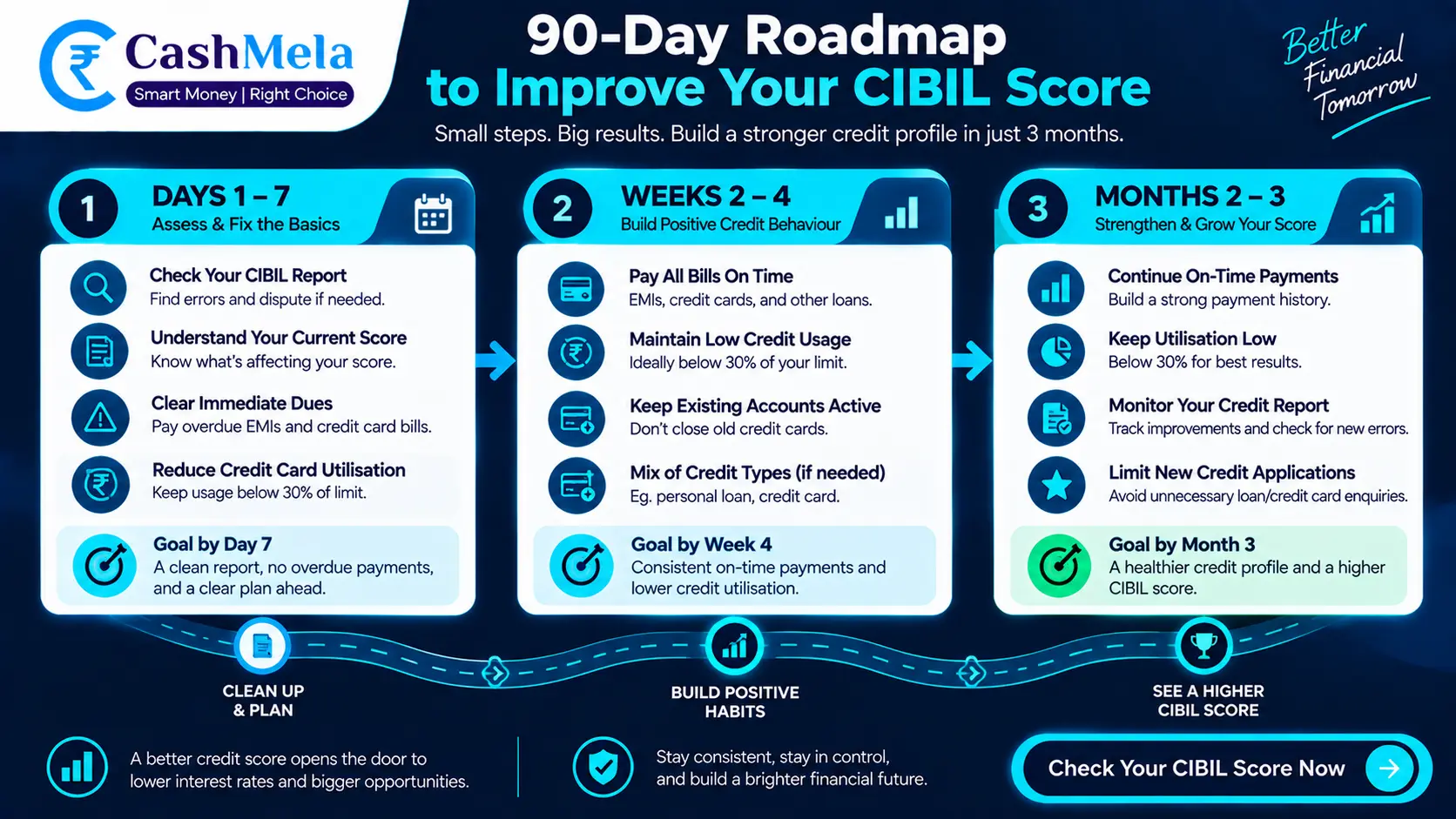
So, how can I improve my CIBIL credit score without waiting years? Treat it like a fitness routine: a few things pay off within weeks, while the rest need steady effort before the results show.
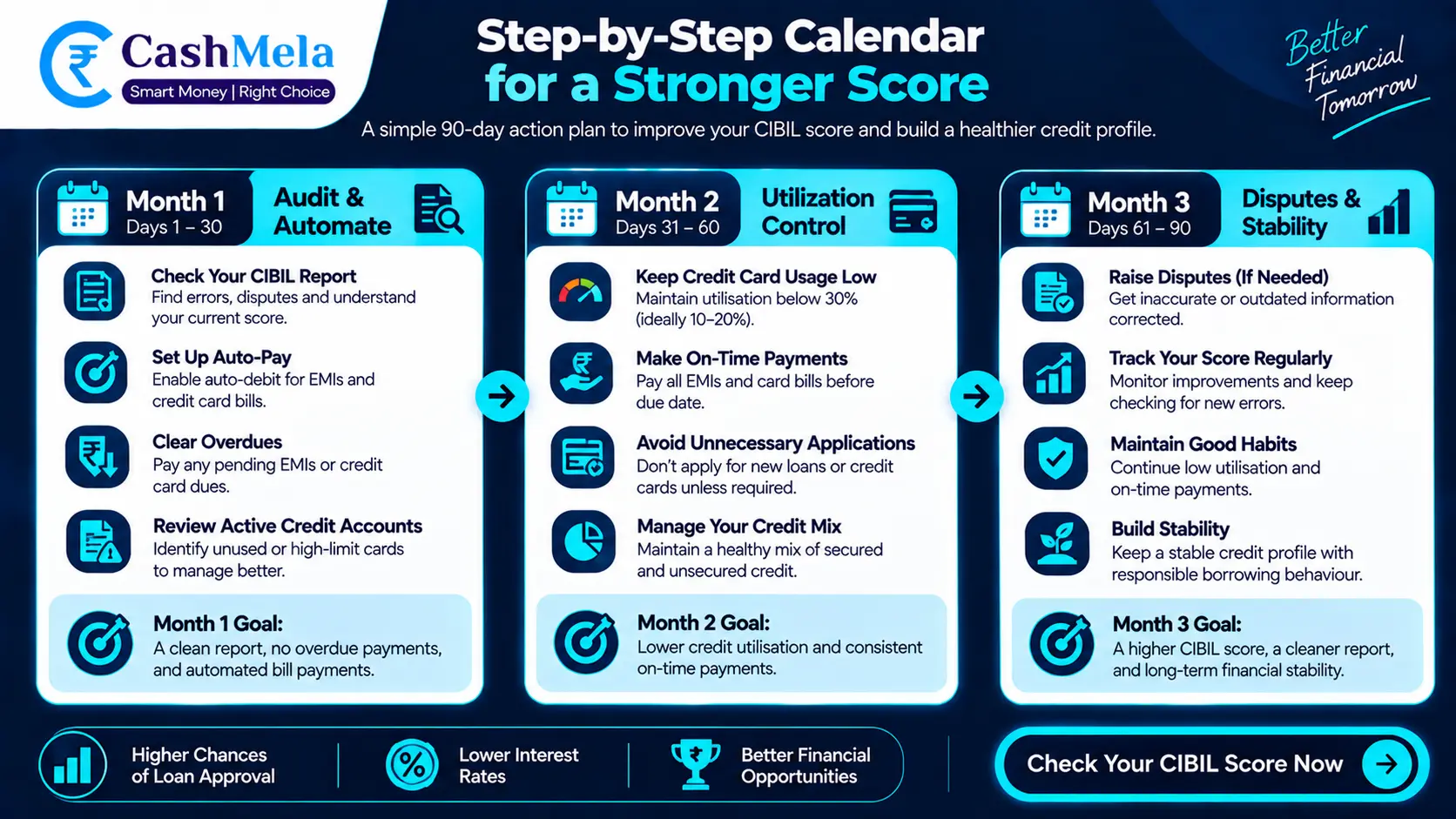
The Three-Phase Plan
| Timeframe | What to Do | What to Expect |
|---|---|---|
| Week 1 | Download your full report, note each account, and mark anything you don't recognise | A clear picture, though the score won't move yet |
| Weeks 2 to 4 | Pay off anything overdue and automate every EMI and card payment | No new damage piles up |
| Month 2 | Keep card spending under roughly 30% of each limit | Usually where the quickest gain shows |
| Month 3 | Stay consistent, skip new credit applications, chase any open disputes | The score starts reflecting steady behaviour |
Consider Imran, a delivery-firm supervisor in Hyderabad. A personal loan application was turned down when his score sat at 662. Rather than firing off applications elsewhere, he worked through a routine very close to the table above. Around five months on, the score stood at 741, and a second application went through on clearly better terms. No dramatic turn of events: he had simply stopped repeating a handful of small slips.
How Can I Improve My CIBIL Credit Score by Fixing Payment Habits First
Nothing outweighs payment history, which accounts for roughly a third of the score. Should you keep just one answer to how can I improve my CIBIL credit score, let it be this: never let a due date slip past.
Habits That Actually Stick
- Automate every EMI through auto-debit: Leave a little cushion in that account so a payment never bounces.
- Settle the full statement balance: Pay your card bill in full instead of stopping at the minimum amount due.
- Deal with overdue amounts immediately: Unpaid dues keep dragging the score until they're cleared.
- Align due dates with salary cycles: See if your lender will shift the due date to a day or two after your salary lands; many will if you simply request it.
Dull advice? Absolutely. It's also your strongest lever, and with lenders now reporting more often, a spotless month reaches your report much sooner than it once did.
How Can I Improve My CIBIL Credit Score by Lowering Credit Utilization
Credit utilization is the easiest win on the list. It compares what you owe with what you're allowed to borrow, and lenders generally get more comfortable once that ratio sits under roughly 30%.
Here's a detail most answers to how can I improve my CIBIL credit score leave out: what gets reported is typically the balance on your statement date, not the one on your due date. Paying down part of the bill before the statement is cut can keep the reported number small, even in a heavy spending month.
A Few More Ways to Hold the Ratio Down:
- Split spending across several cards: Rather than maxing out a single card, divide purchases since there's no sense putting every egg in one basket.
- Request a higher limit on a card you handle well: Confirm first whether the request triggers a hard inquiry before proceeding.
- Steer clear of pushing cards to the limit: Avoid high utilization for large purchases, even when you intend to repay fast.
What Should You Do About Errors and Old Accounts
Some of the damage isn't yours at all. Credit reports occasionally carry errors: a payment shown as late when it wasn't, or a loan you never took out. Go through the full report, and file a dispute with the bureau for anything wrong, with supporting proof if you have it. It's a quiet answer to how can I improve my CIBIL credit score that most guides skip, and it costs nothing but a little attention.
Old accounts are worth a second look too. Shutting down your oldest card feels neat, yet it can shorten your credit history and raise your utilization in one move. Unless the annual fee really hurts, leave it open and put a small purchase on it every so often.
Starting with a thin or empty file? A card secured by a fixed deposit is a low-risk way to begin building a record, provided you spend lightly and clear the bill every month.

What Mistakes Quietly Keep Your Score Stuck
Whenever someone asks how can I improve my CIBIL credit score, the usual reply covers payments and utilization, then stops. The slower leaks rarely get a mention:
- Firing off applications to several lenders in a short span: Every hard inquiry shaves a little off your score.
- Closing a debt for less than what you owed: A "settled" status can stay visible on your report for years.
- Brushing off small overdue amounts as too minor to matter: Even small dues register as delinquencies.
- Refreshing your score constantly and overreacting: Don't stress over normal reporting delays instead of watching the overall trend.
Keep reading: our related guides on CIBIL Credit Score Range, CIBIL Credit Score Updates, and How to Check CIBIL Credit Score cover the rest.
Frequently Asked Questions
Q1: How can I improve my CIBIL credit score quickly if I only have a month?
A: Concentrate on two moves: pay off overdue amounts and bring card balances down before the statement date. Expect a modest lift in a single month; the larger climb usually arrives after two or three months of steady habits.
Q2: How can I improve my CIBIL credit score by paying off a loan early?
A: Possibly, because a closed loan shows you repay what you borrow, but don't count on a big jump. How much it helps depends on the rest of your profile, mainly payment history and utilization.
Q3: Does a "settled" account mean the problem is fixed?
A: Not completely. "Settled" tells lenders you paid less than the full amount, and they do notice. Paying in full avoids it; if one already sits on your report, the best response is a long, clean stretch of on-time payments.
Q4: How long do late payments stay on my report?
A: Late payments can remain visible for years, though they matter less as fresh positive activity piles up. That's exactly why the habits you start today count.
Q5: Can I build a score with no credit history at all?
A: You can, by giving lenders something to score. A deposit-backed card or a small loan repaid on schedule does the job; just keep usage light and clear the bill in full each month.
Conclusion
So, how can I improve my CIBIL credit score in the end? There's no shortcut, just a few dependable habits repeated: pay on time, keep card balances low, correct mistakes, and hold back from applying everywhere at once. Follow the plan above, give it a few months, and look at your progress monthly instead of daily. Small, steady changes stack up faster than most people expect.
Ready to see what you qualify for? Check your eligibility and apply now for a loan or card that matches your credit profile.
Stay Informed, Stay Ahead!
Follow Cashmela on social media for more practical finance guides, loan tips, and the latest updates:
- 💰 Instagram: @cashmela_com – Simple finance tips and real borrower stories
- 👍 Facebook: Cashmela – Join the conversation and never miss an update
- 🐦 X: @cash_mela – Quick updates and finance news
- 💼 LinkedIn: Cashmela – Industry insights and company updates
✨ Let's make smarter borrowing simple, together!

Adil Patel
Founder & Chief Executive OfficerAuthor & Financial Analyst at CashMela.com
Adil Patel is the Founder of Cashmela.com. With over a decade of deep domain expertise across Indian banking, debt restructuring, and digital lending, Adil established Cashmela to liberate Indian borrowers from predatory credit card interest traps and opaque multi-EMI debt burdens. Under his leadership, Cashmela has helped over 50,000 borrowers consolidate EMIs into single, transparent, and affordable repayment plans.